Basic Electrical Engineering
What Is a Battery? How a Power Source Works
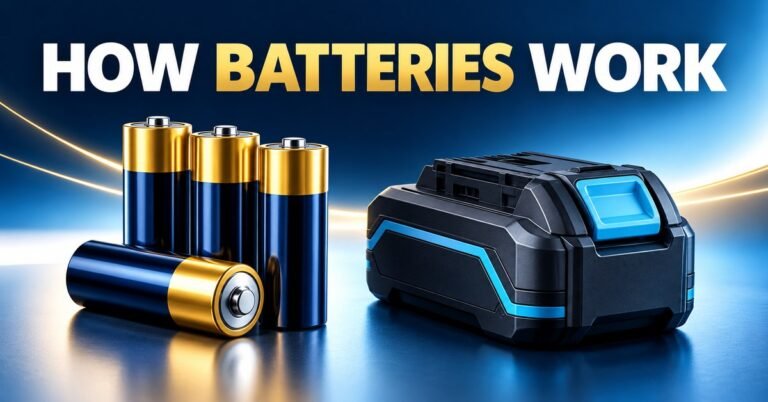
What is a battery and how does it work? Learn about chemical energy, voltage, common battery types, capacity, charging, and realistic runtime with examples.
What is a battery and how does it work? Learn about chemical energy, voltage, common battery types, capacity, charging, and realistic runtime with examples.
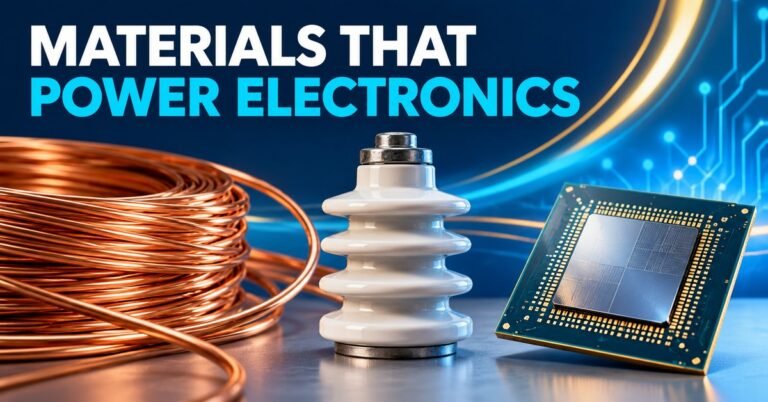
Compare conductors insulators and semiconductors with everyday examples, clear energy band explanations, and practical tips for learning electronic materials.
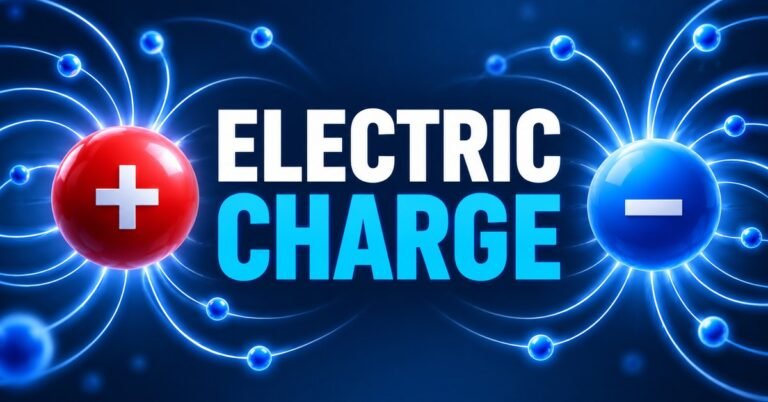
Understand electric charge, coulombs, positive and negative charge, and static electricity with simple examples that connect charge to current and voltage.
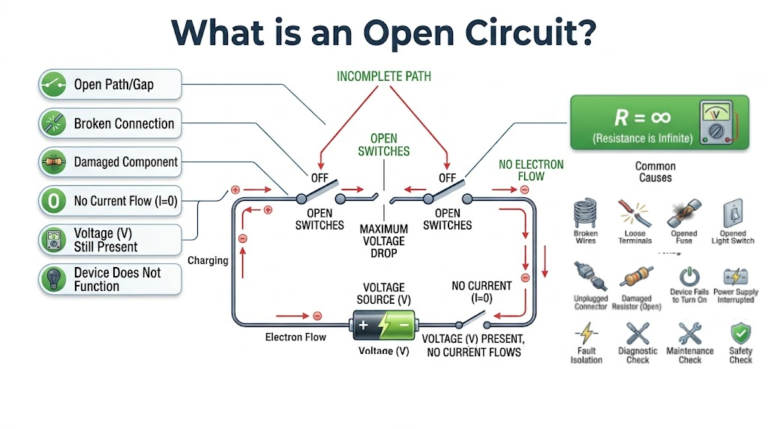
An open circuit interrupts a current path. Learn its causes, everyday examples, voltage behavior, and how it differs from closed and short circuits.
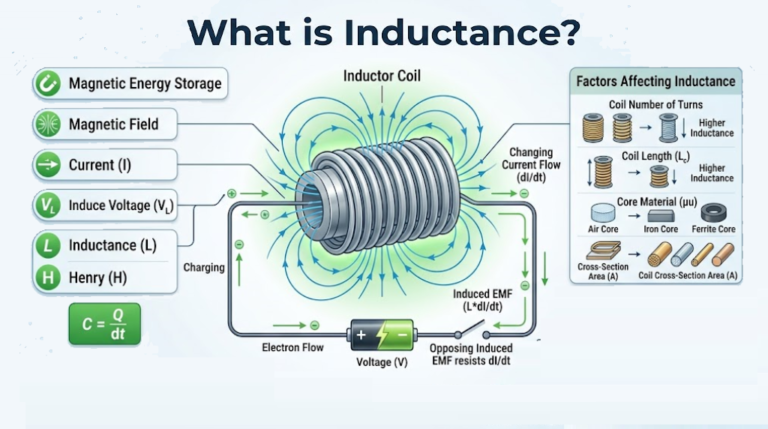
Learn inductance, the formulas v = L di/dt and E = 1/2 LI², how inductors respond to changing current, and practical uses, calculations and selection checks.
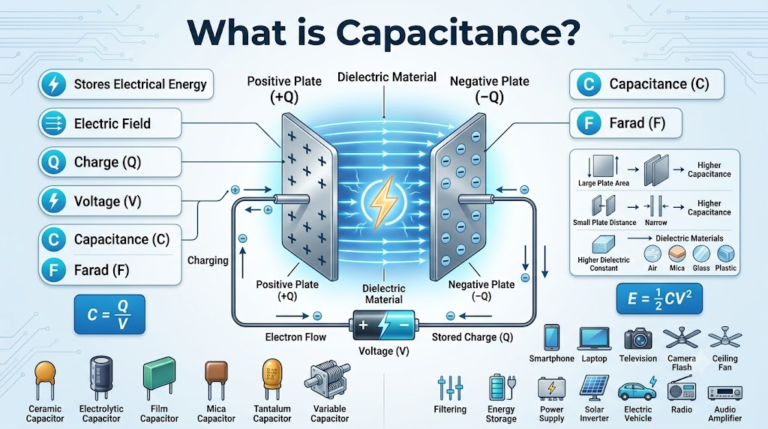
Understand capacitance, the formula C = Q/V, capacitor energy and RC charging, with worked examples, common types and practical component selection checks.
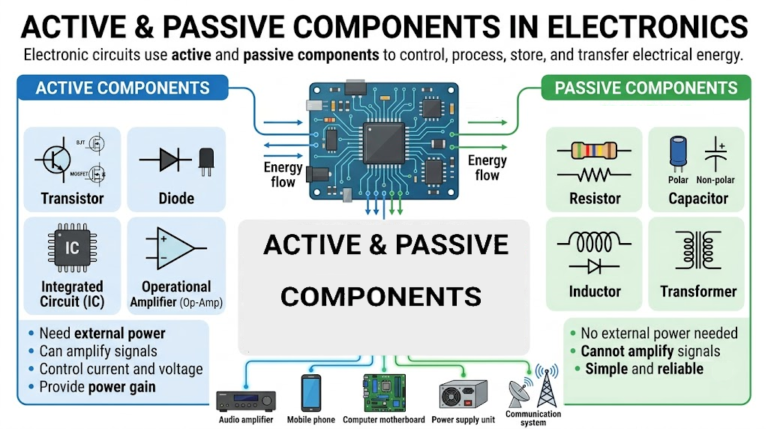
Compare active vs passive components, understand power gain and energy storage, and explore examples, practical circuits and a clear selection checklist.
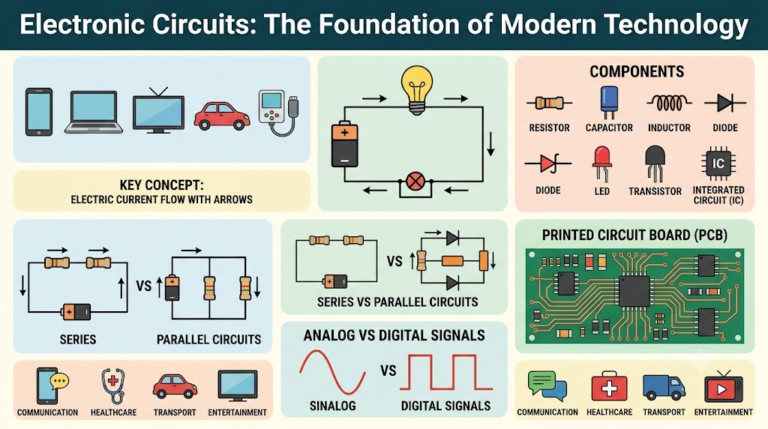
Learn how electronic circuits work, follow voltage and current through basic components, compare circuit types and calculate a simple LED resistor step by step.
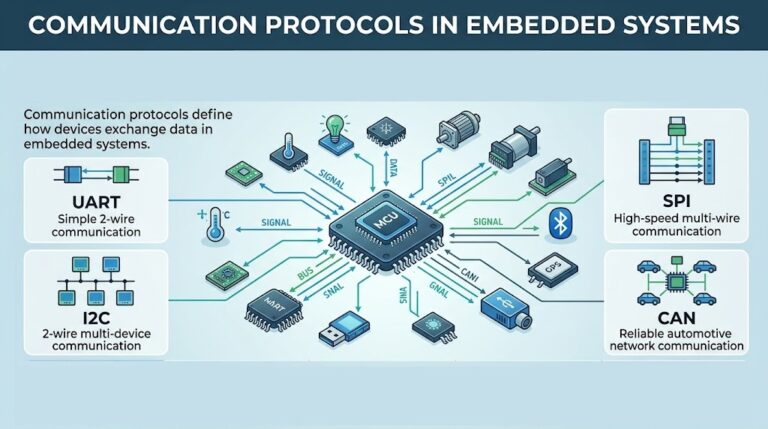
Compare embedded communication protocols UART, SPI, I2C and CAN, including wiring, clocking, voltage levels and steps for choosing a reliable project interface.
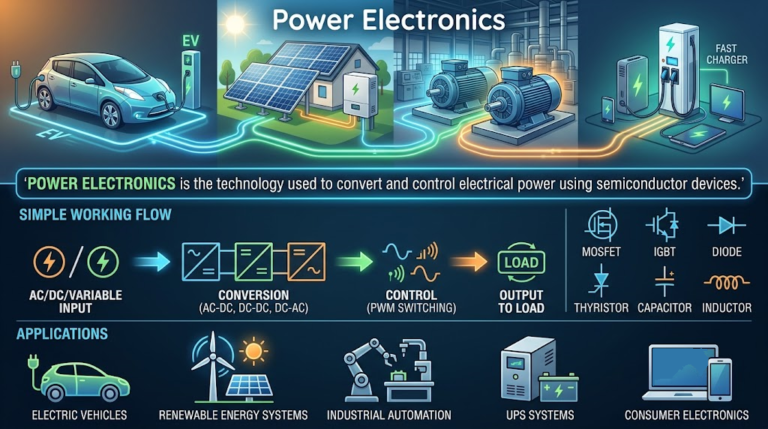
Learn how power electronics converts and controls electrical energy, compare converter types and devices, and explore losses, ratings and useful applications.