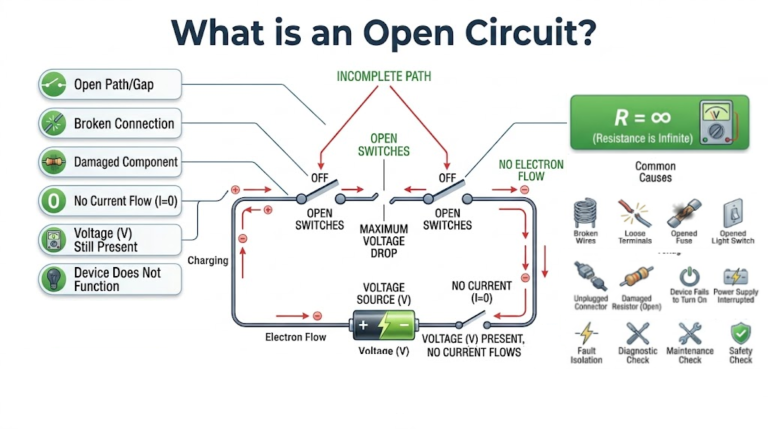
What is an Open Circuit?

An open circuit is an electrical circuit in which the path for electric current is broken or incomplete, preventing the flow of electricity. It is a fundamental concept in electricity and electronics, helping students and professionals understand how electrical systems operate and why devices stop working when a circuit is interrupted. This comprehensive guide explains the definition of an open circuit, its working principle, components, causes, characteristics, real-life examples, advantages, disadvantages, applications, and the key differences between open and closed circuits. Whether you are a student, engineer, or electronics enthusiast, this article provides a clear and detailed explanation of open circuits for learning, exam preparation, and practical understanding.
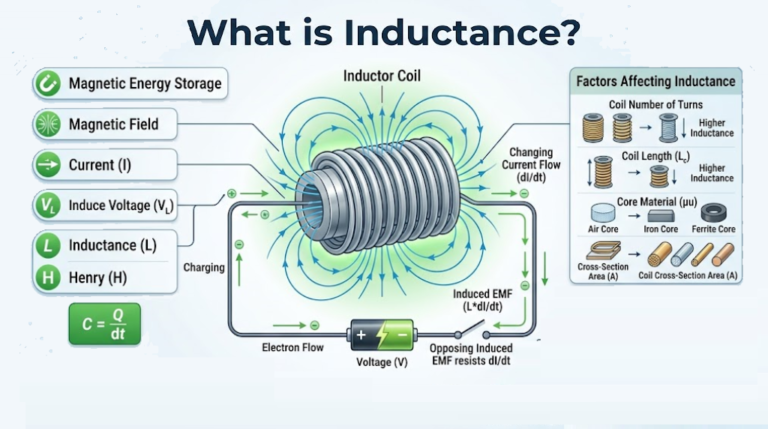
What is Inductance?

Inductance is a fundamental property of electrical conductors and coils that opposes changes in electric current through electromagnetic induction. This comprehensive guide explains the definition of inductance, its working principle, formula, SI unit, and the difference between self-inductance and mutual inductance. It also covers the factors affecting inductance, energy stored in an inductor, types of inductors, and their practical applications in transformers, motors, generators, filters, power supplies, wireless charging, and communication systems. Whether you’re a student of physics, electronics, or electrical engineering, this article provides a clear understanding of inductance, its advantages, disadvantages, and its importance in modern electrical and electronic technology.

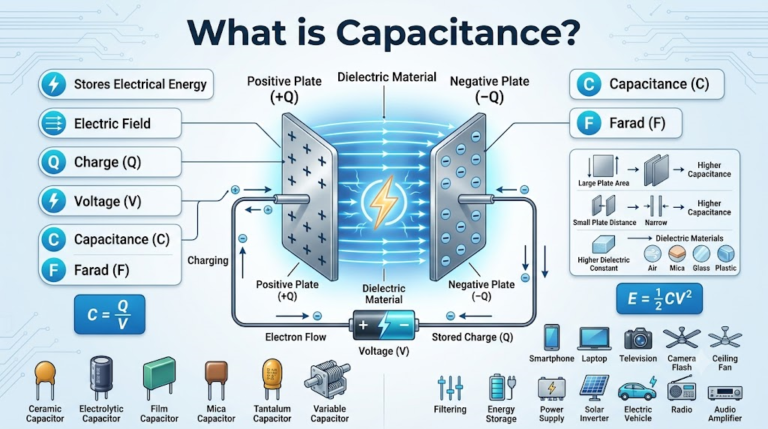
What is Capacitance?

Capacitance is the ability of a capacitor to store electric charge and electrical energy in an electric field. Learn the definition, formula (C = Q/V), SI unit (Farad), working principle, capacitor construction, factors affecting capacitance, types of capacitors, energy storage equation, practical applications, advantages, limitations, and real-world examples in electronics and electrical engineering.

What is Electrical Grounding?

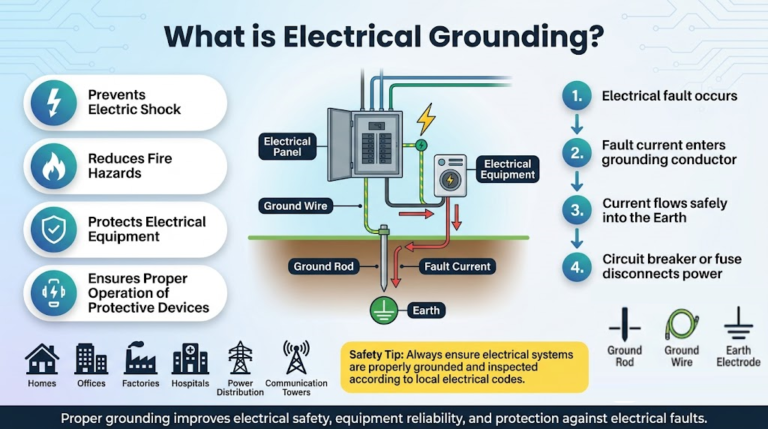
Electrical grounding (earthing) is a vital electrical safety system that protects people, equipment, and buildings from electric shocks, fire hazards, lightning, and power surges. This comprehensive guide explains the purpose of grounding, its working principle, components, types, advantages, applications, and maintenance, helping students, electricians, and engineers understand why grounding is essential in every electrical installation.

What is Resistance?

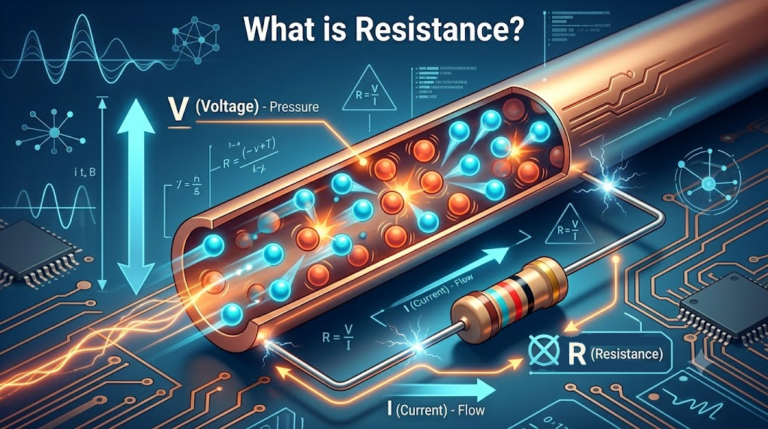
Resistance is the property of a material that opposes the flow of electric current. Measured in ohms (Ω), resistance plays a crucial role in electrical and electronic circuits by controlling current, protecting components, and converting electrical energy into heat. This comprehensive guide explains the definition, factors affecting resistance, types of resistance, Ohm’s Law, and real-world applications.

What is an Inverter?

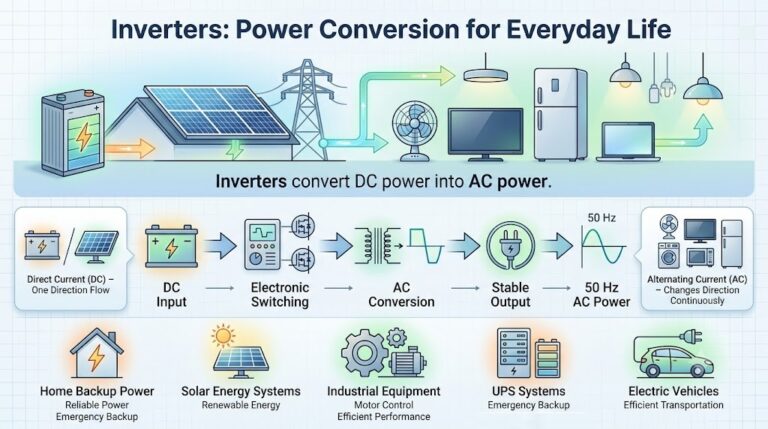
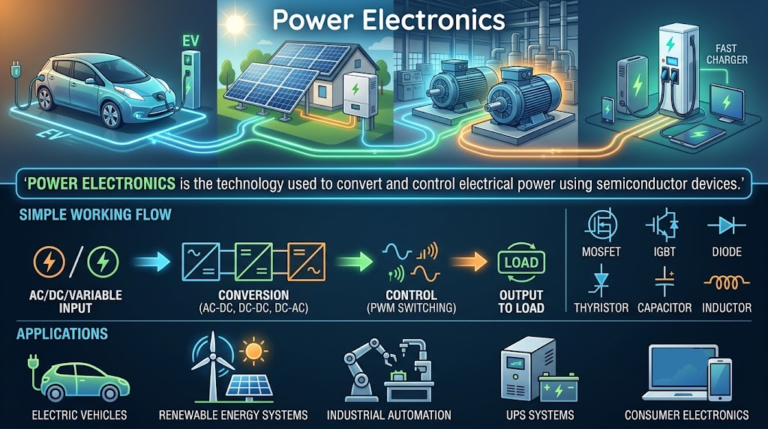
An inverter is an electrical device that converts direct current (DC) into alternating current (AC), enabling batteries and solar panels to power household and industrial appliances. This article explains the working principle, types, components, applications, advantages, and disadvantages of inverters in a simple and easy-to-understand manner.

Active and Passive Components

What are Active and Passive Components?

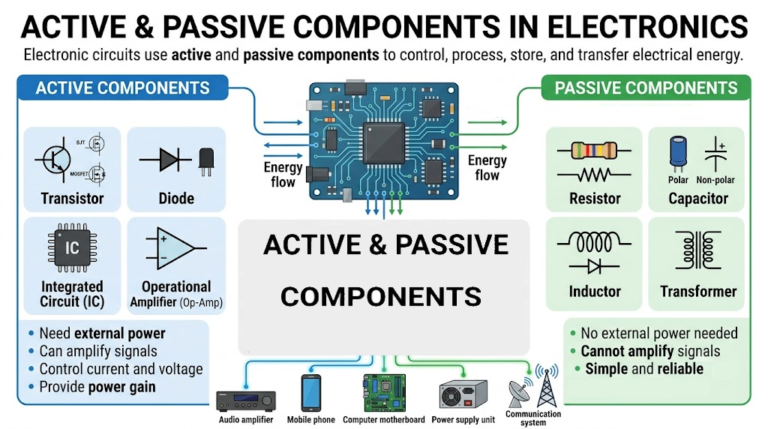
Active and passive components are the fundamental building blocks of electronic circuits. Active components such as transistors, diodes, ICs, and operational amplifiers require external power and can amplify or control signals. Passive components including resistors, capacitors, inductors, and transformers store, transfer, or dissipate energy without amplification. Understanding these components is essential for electronics students, engineers, and anyone interested in circuit design.

Electronic Circuits

How Do Electronic Circuits Work?

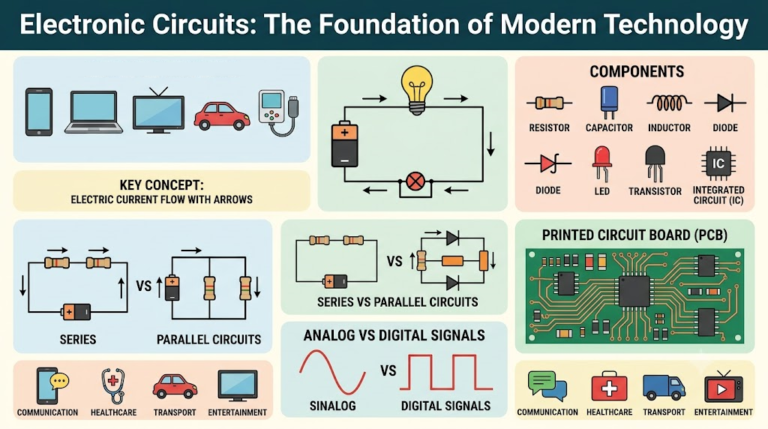
Electronic circuits are the backbone of modern technology, powering everything from smartphones to computers and home appliances. This guide explains how circuits work, their key components, and basic principles in a simple and easy-to-understand way. It is ideal for beginners in electronics and engineering.