Basic Electrical Engineering
What Is Voltage? Meaning, Formula, and Examples
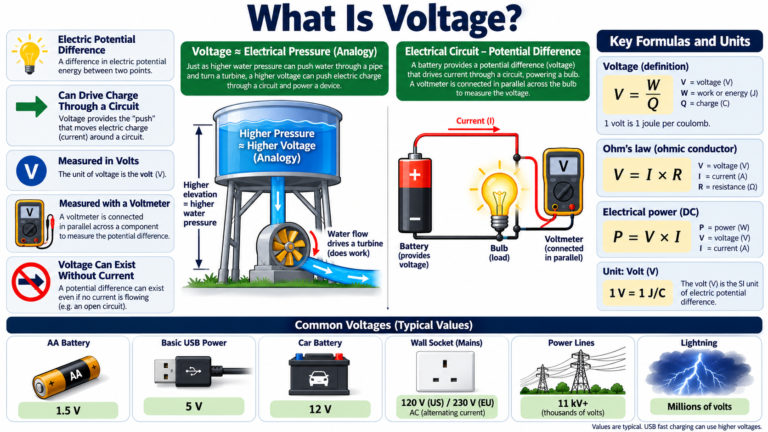
Voltage is the difference in electric potential between two points. It tells us how much energy can be transferred per unit charge as charge moves between…
Voltage is the difference in electric potential between two points. It tells us how much energy can be transferred per unit charge as charge moves between…
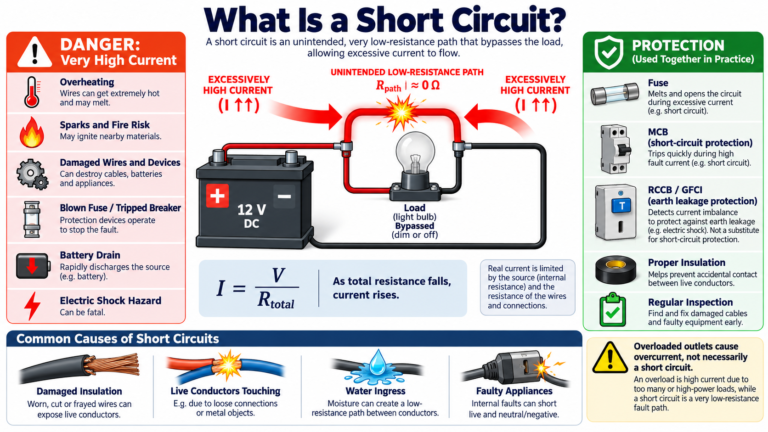
A short circuit is an unintended connection that creates a low-impedance path between points at different electrical potentials. Instead of following the designed route through a…
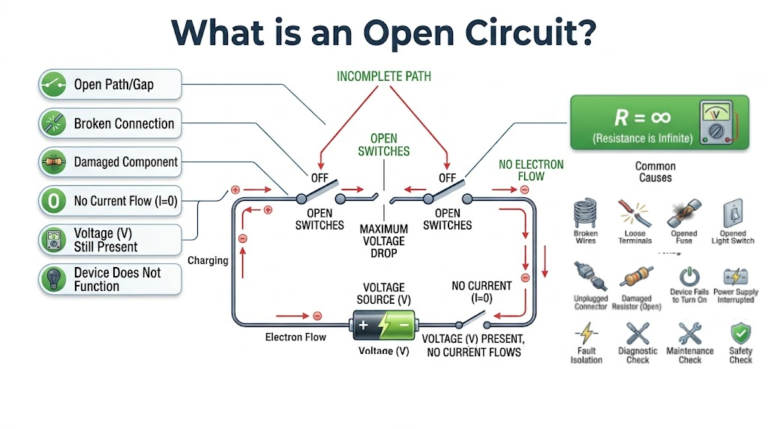
An open circuit interrupts a current path. Learn its causes, everyday examples, voltage behavior, and how it differs from closed and short circuits.
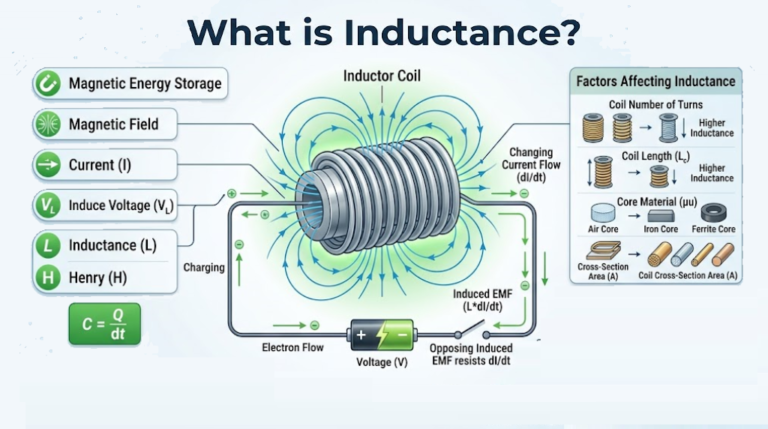
Inductance is a fundamental property of electrical conductors and coils that opposes changes in electric current through electromagnetic induction. This comprehensive guide explains the definition of…
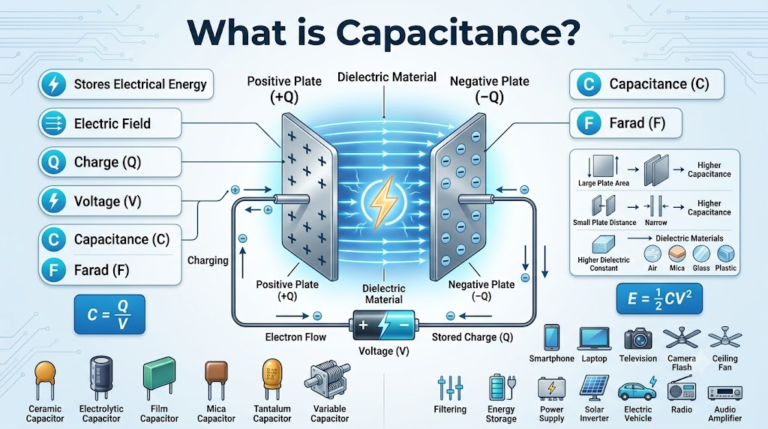
Capacitance is the ability of a capacitor to store electric charge and electrical energy in an electric field. Learn the definition, formula (C = Q/V), SI…
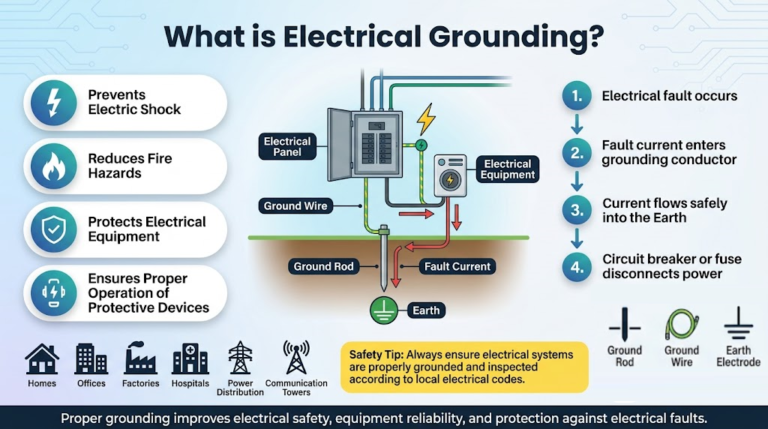
Understand earthing, protective bonding and fault-current return paths, including how TN, TT and IT arrangements affect protective disconnection.
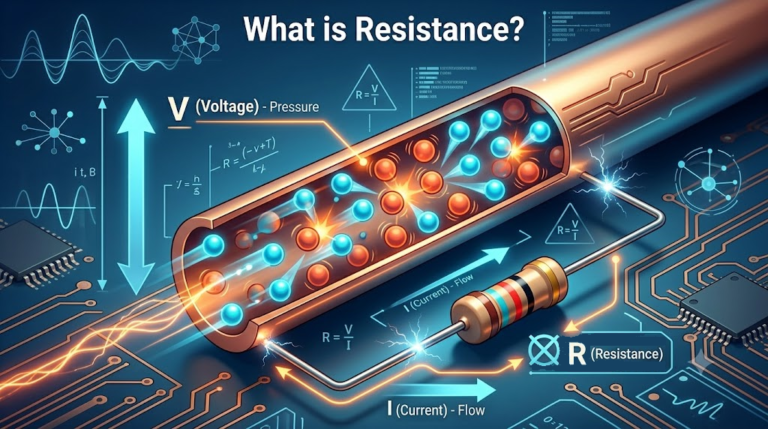
Learn how electrical resistance works, calculate it with simple examples, compare resistor types, and measure resistance safely with a multimeter.
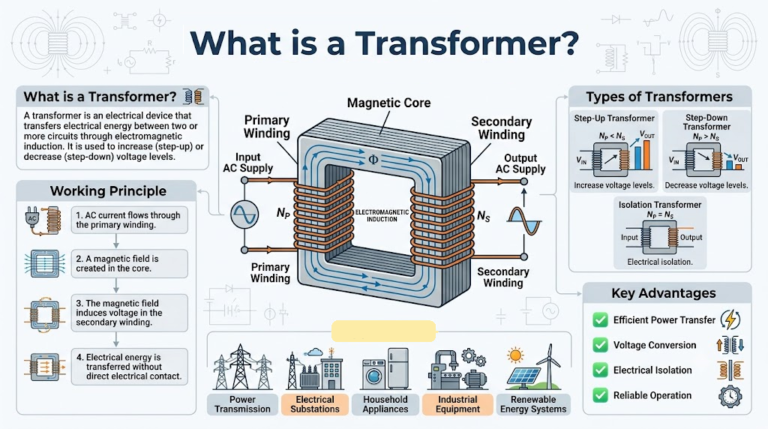
Understand how an electrical transformer changes AC voltage, calculate turns ratio, and compare common types, uses, losses, and ratings.