Electrical grounding, also known as earthing, is one of the most important safety measures used in electrical systems. It is the process of connecting electrical equipment, circuits, or installations directly to the earth through a low-resistance conductor. The primary purpose of grounding is to protect people, electrical equipment, and buildings from electric shocks, fires, and damage caused by electrical faults, lightning strikes, or power surges.
Grounding is a fundamental part of residential, commercial, and industrial electrical systems. Without proper grounding, fault currents may flow through unintended paths, creating dangerous situations that can lead to injury, equipment failure, or even loss of life. Modern electrical standards and regulations require grounding in almost every electrical installation to ensure safe and reliable operation.
What is Electrical Grounding?
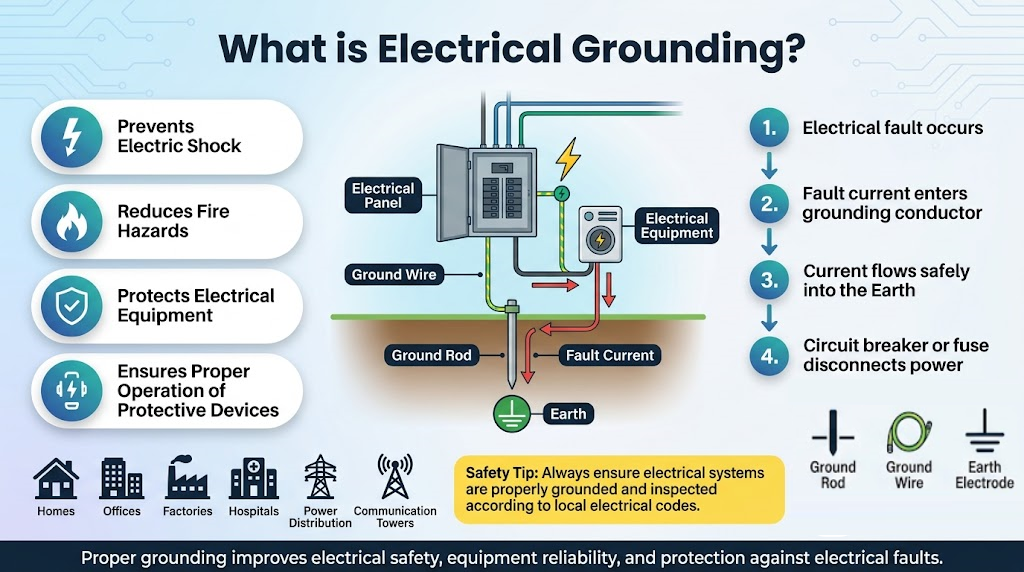
Electrical grounding is the intentional connection of an electrical system or electrical equipment to the earth using a conductor such as a copper wire or grounding rod. The earth acts as a huge reservoir that can safely absorb unwanted electrical current without causing harm.
In normal operating conditions, electrical current flows through the phase (live) and neutral conductors. However, if an insulation failure or equipment fault occurs, the current may come into contact with the metal body of an appliance. If the appliance is not grounded, anyone touching it could receive a dangerous electric shock. Grounding provides an alternative low-resistance path for the fault current to travel safely into the earth, reducing the risk of injury.
Grounding also stabilizes voltage levels in electrical systems by providing a common reference point, ensuring proper operation of electrical equipment.
Purpose of Electrical Grounding
The main objectives of electrical grounding include:
1. Protection Against Electric Shock
Grounding protects people from accidental contact with energized metal parts. When a fault occurs, the fault current flows through the grounding conductor instead of the human body.
2. Equipment Protection
Electrical appliances and machines are protected from damage caused by insulation failures, short circuits, or excessive voltage.
3. Fire Prevention
Fault currents can generate excessive heat that may start electrical fires. Proper grounding allows protective devices like fuses and circuit breakers to disconnect the faulty circuit quickly.
4. Lightning Protection
Grounding provides a safe path for lightning current to travel into the earth, reducing damage to buildings and electrical equipment.
5. Voltage Stabilization
Grounding establishes a stable reference voltage for electrical systems, helping maintain consistent operation of sensitive electronic devices.
Components of a Grounding System
A complete grounding system consists of several important components:
Ground Electrode
The ground electrode is buried in the earth and provides direct contact with the soil. Common types include:
- Copper rods
- Galvanized steel rods
- Ground plates
- Ground grids
Grounding Conductor
This conductor connects the electrical system or equipment to the ground electrode. Copper conductors are widely used because they have excellent electrical conductivity and corrosion resistance.
Earth Pit
An earth pit is a specially prepared location where the grounding electrode is installed. Materials such as charcoal, bentonite, or salt may be used to improve soil conductivity.
Bonding
Bonding connects all exposed metal parts of electrical equipment together to ensure they remain at the same electrical potential, reducing the risk of shock.
Types of Electrical Grounding
Several types of grounding are used depending on the application.
1. Equipment Grounding
Equipment grounding connects the metallic body of electrical equipment to the earth. Examples include:
- Refrigerators
- Washing machines
- Air conditioners
- Industrial motors
Its main purpose is to protect users from electric shock.
2. System Grounding
System grounding connects one point of the electrical power system, usually the neutral point of a transformer or generator, to the earth.
This improves system stability and simplifies fault detection.
3. Solid Grounding
In this method, the neutral point is connected directly to the earth without any resistance.
Advantages:
- Simple design
- Fast fault clearing
- Common in low-voltage systems
4. Resistance Grounding
A resistor is connected between the neutral point and earth to limit fault current.
Advantages:
- Reduced equipment damage
- Better system reliability
5. Reactance Grounding
An inductor (reactor) limits fault current instead of a resistor.
It is commonly used in medium-voltage systems.
Working Principle of Electrical Grounding
The working principle of grounding is based on providing the lowest resistance path for unwanted electrical current.
Under normal conditions:
- Current flows through the live conductor.
- Returns through the neutral conductor.
- No current flows through the grounding conductor.
During a fault:
- Fault current flows into the grounding conductor.
- The current travels safely into the earth.
- Circuit breakers or fuses detect the excessive current.
- The electrical supply is automatically disconnected.
This rapid disconnection prevents injury and equipment damage.
Advantages of Electrical Grounding
Electrical grounding offers numerous benefits.
Safety
It significantly reduces the risk of electric shock and electrocution.
Equipment Protection
Grounding protects expensive electrical equipment from overloads, faults, and surges.
Improved Reliability
Electrical systems operate more efficiently with fewer interruptions.
Fire Protection
Proper grounding minimizes overheating caused by fault currents.
Lightning Protection
Grounding safely dissipates lightning energy into the earth.
Reduced Electrical Noise
Sensitive electronic equipment performs better because grounding reduces electrical interference.
Applications of Electrical Grounding
Grounding is widely used in many areas.
Residential Buildings
- Home wiring
- Kitchen appliances
- Air conditioners
- Water heaters
Commercial Buildings
- Office electrical systems
- Computer networks
- Elevators
- HVAC systems
Industrial Plants
- Heavy machinery
- Motors
- Generators
- Transformers
Power Systems
- Transmission substations
- Distribution networks
- Power plants
Telecommunication Systems
Grounding protects communication equipment from lightning and voltage surges.
Hospitals
Medical equipment requires excellent grounding to ensure patient safety and reliable operation.
Importance of Proper Grounding
Improper grounding can lead to serious consequences, including:
- Electric shock
- Electrical fires
- Damage to appliances
- Equipment malfunction
- Increased maintenance costs
- Failure of protective devices
- Risk during lightning strikes
Regular testing of grounding systems ensures that earth resistance remains within acceptable limits.
Maintenance of Grounding Systems
To maintain an effective grounding system:
- Inspect grounding conductors regularly.
- Check for corrosion.
- Measure earth resistance periodically.
- Tighten loose connections.
- Replace damaged grounding rods.
- Ensure moisture around the earth pit if required.
Proper maintenance increases safety and extends the life of electrical installations.
Conclusion
Electrical grounding is an essential part of every electrical installation because it provides protection against electric shock, equipment damage, and fire hazards. It offers a safe path for fault current to flow into the earth and ensures that protective devices operate correctly during electrical faults. Grounding also improves system stability, protects against lightning, and enhances the reliability of electrical equipment.
Whether in homes, industries, hospitals, or power stations, effective grounding plays a critical role in ensuring electrical safety. Regular inspection and maintenance of grounding systems are necessary to maintain their performance and comply with electrical safety standards. Therefore, electrical grounding remains one of the most important practices in modern electrical engineering and power distribution.