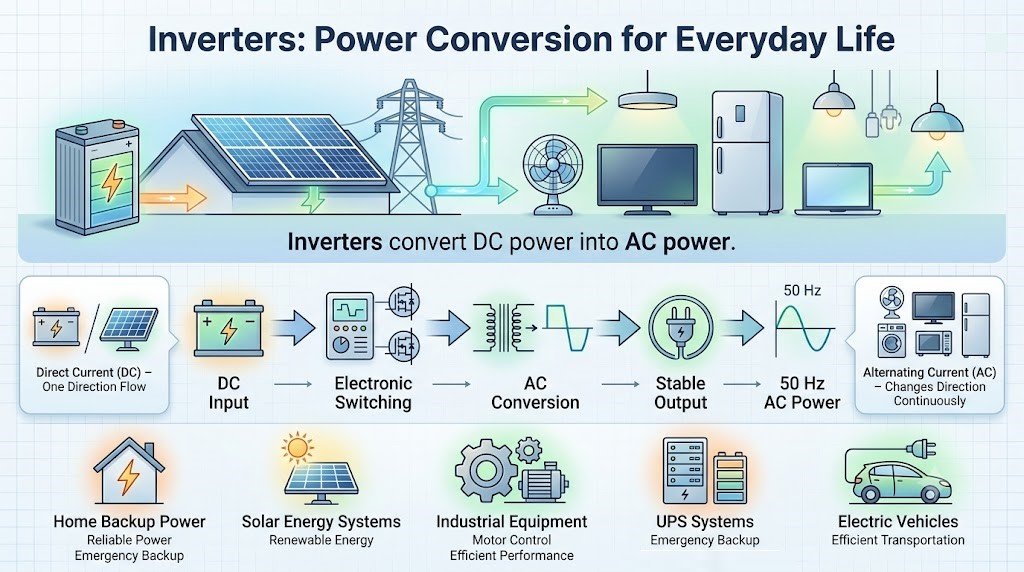
An inverter is an electrical device that converts Direct Current (DC) into Alternating Current (AC). DC power is supplied by batteries, solar panels, and other DC sources, while most household appliances and industrial equipment operate on AC power. The inverter acts as a bridge between these two forms of electricity, making it possible to use DC-generated power for AC-operated devices.
In today’s world, inverters play an important role in homes, offices, industries, and renewable energy systems. They provide backup power during electricity outages and help utilize energy generated from solar panels efficiently. Because of their reliability and efficiency, inverters have become an essential part of modern electrical systems.
Working Principle of an Inverter
The main function of an inverter is to transform DC power into AC power. It does this through electronic switching circuits. The inverter rapidly switches the direction of current flow, creating an alternating waveform that resembles the AC electricity supplied by power stations.
The basic working process is as follows:
- DC Input: The inverter receives DC power from a battery, solar panel, or other DC source.
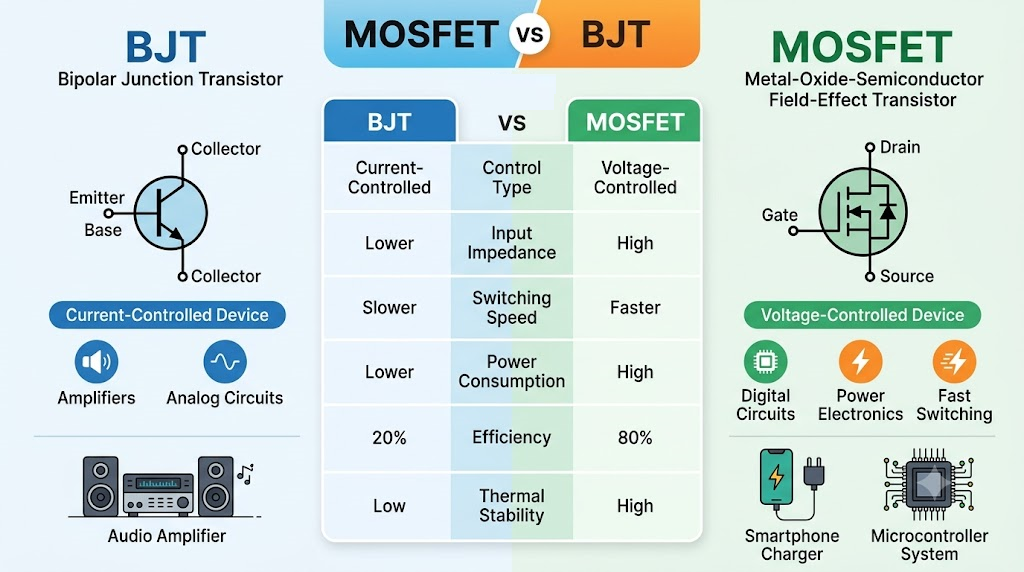
- Switching Process: Electronic components such as transistors or MOSFETs switch the current on and off at high speed.
- Waveform Generation: The switching action creates an alternating waveform.
- Voltage Regulation: Transformers and filters adjust the voltage and improve the quality of the output waveform.
- AC Output: The inverter supplies AC power to electrical appliances.
The output frequency is usually 50 Hz or 60 Hz, depending on the country’s electrical standards. In India, most inverters provide AC output at 50 Hz.
Types of Inverters
Inverters are classified according to the waveform they produce.
1. Square Wave Inverter
A square wave inverter produces a simple square-shaped output waveform. It is inexpensive and easy to design but has low efficiency and can cause problems with sensitive electronic equipment.
Advantages
- Low cost
- Simple construction
Disadvantages
- High harmonic distortion
- Not suitable for modern electronic devices
2. Modified Sine Wave Inverter
This type produces a waveform closer to a sine wave than a square wave inverter. It is commonly used in homes for basic appliances.
Advantages
- More efficient than square wave inverters
- Affordable
Disadvantages
- May produce noise in some devices
- Not ideal for sensitive equipment
3. Pure Sine Wave Inverter
A pure sine wave inverter generates an output almost identical to the electricity supplied by utility companies. It is considered the best type of inverter.
Advantages
- High efficiency
- Suitable for all appliances
- Smooth operation of motors and electronics
Disadvantages
- Higher cost
Components of an Inverter
An inverter consists of several important components:
Battery
The battery stores DC electrical energy and supplies power to the inverter during operation.
Switching Circuit
The switching circuit contains transistors, MOSFETs, or IGBTs that convert DC into AC.
Transformer
The transformer adjusts the voltage level according to the load requirements.
Control Circuit
This circuit controls the switching operation and ensures proper output voltage and frequency.
Filters
Filters remove unwanted harmonics and improve the quality of the AC waveform.
Together, these components enable the inverter to provide stable and reliable power.
Applications of Inverters
Inverters are widely used in various fields.
Home Power Backup
Inverters provide electricity during power failures. They operate household appliances such as lights, fans, televisions, and computers.
Solar Energy Systems
Solar panels generate DC electricity. Inverters convert this DC power into AC power that can be used in homes and industries.
Industrial Applications
Industries use inverters to control motor speed, improve energy efficiency, and maintain uninterrupted power supply.
Uninterruptible Power Supply (UPS)
Many UPS systems contain inverters that provide immediate backup power to computers, servers, and medical equipment.
Electric Vehicles
Electric vehicles use inverters to convert battery power into AC power for driving electric motors.
Advantages of Inverters
Inverters offer many benefits:
- Provide backup power during outages.
- Improve energy efficiency.
- Support renewable energy systems.
- Enable the use of battery and solar power.
- Protect sensitive equipment from sudden power interruptions.
- Reduce dependence on traditional power sources.
Because of these advantages, inverters are increasingly used in residential and commercial applications.
Disadvantages of Inverters
Despite their benefits, inverters also have some limitations:
- Initial installation cost can be high.
- Batteries require regular maintenance and replacement.
- Energy losses occur during power conversion.
- High-capacity inverters can be expensive.
- Poor-quality inverters may produce distorted output waveforms.
Proper selection and maintenance can minimize these disadvantages.
Conclusion
An inverter is a vital electrical device that converts direct current (DC) into alternating current (AC). It enables the use of battery and solar power for operating household, commercial, and industrial appliances. Inverters are available in square wave, modified sine wave, and pure sine wave types, each designed for different applications. They are widely used in power backup systems, renewable energy installations, UPS systems, and electric vehicles. With the growing demand for reliable and sustainable energy solutions, the importance of inverters continues to increase. Their ability to provide uninterrupted power and support renewable energy makes them an essential component of modern electrical systems.