Basic Electrical Engineering
What Is a Multimeter? How to Measure Voltage, Current and Resistance
Learn how to use a multimeter to measure voltage, current and resistance, with battery-powered examples and essential safety checks.
Learn how to use a multimeter to measure voltage, current and resistance, with battery-powered examples and essential safety checks.
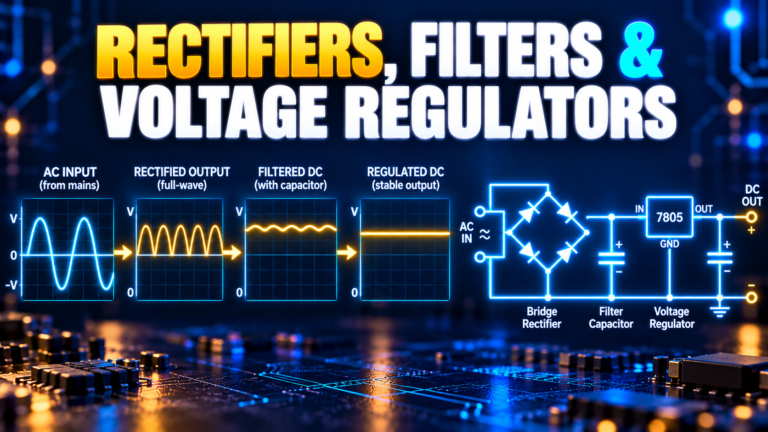
A rectifier, filter, and voltage regulator each solve a different part of the power-supply problem. The rectifier converts AC to pulsating DC, the filter reduces ripple,…
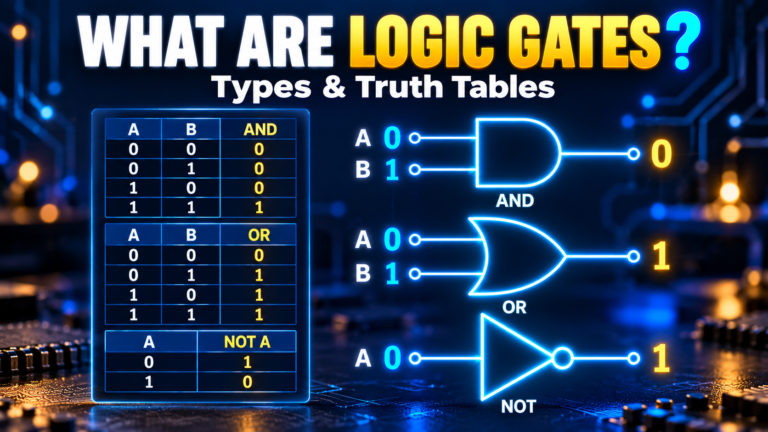
Learn how logic gates work, compare AND, OR, NOT, NAND, NOR and XOR truth tables, and build a simple Boolean decision with practical digital circuit checks.
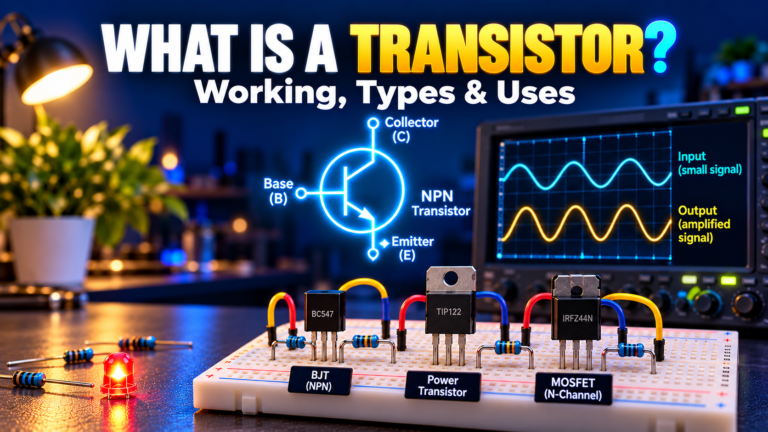
How can a tiny component turn a weak sensor signal into an action, or switch a motor on and off? A transistor makes both possible. A…
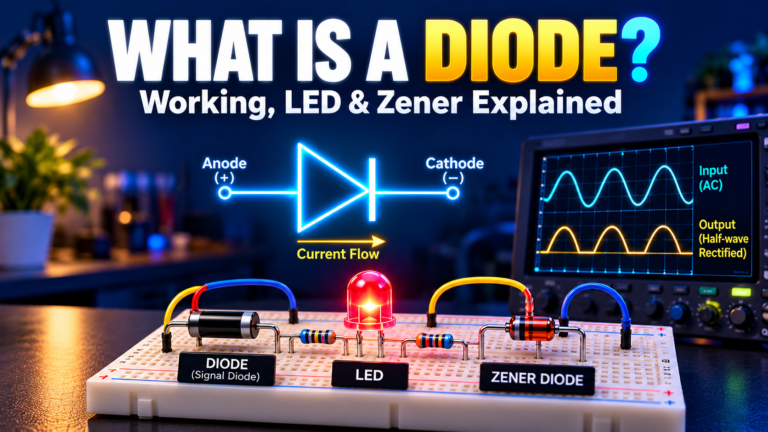
A small diode can protect a circuit from a backward battery or turn alternating current into a usable supply. Another diode can light up, while a…
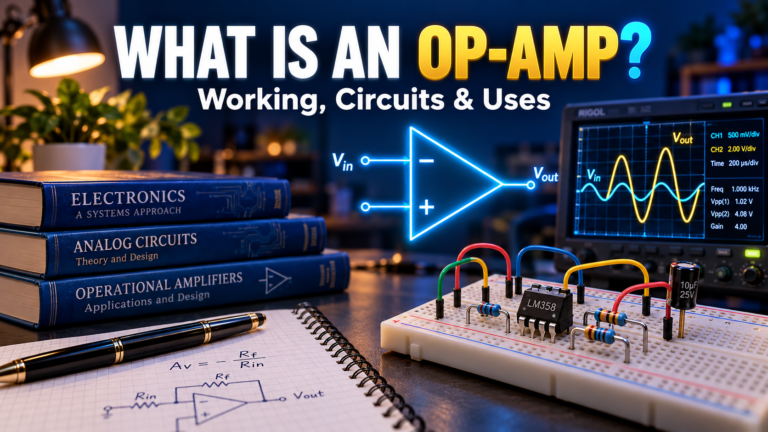
A sensor may produce only a tiny voltage, yet a controller needs a signal it can measure reliably. An op-amp can help bridge that gap. An…
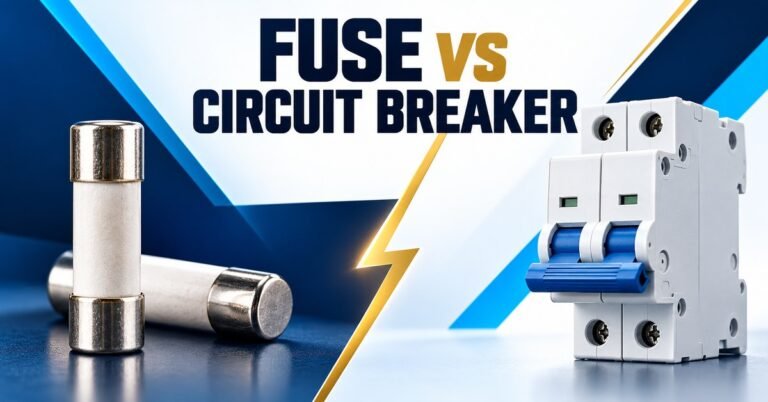
Compare fuse and circuit breaker operation, overload and short circuit protection, MCBs, key ratings, and replacement mistakes in this clear beginner's guide.
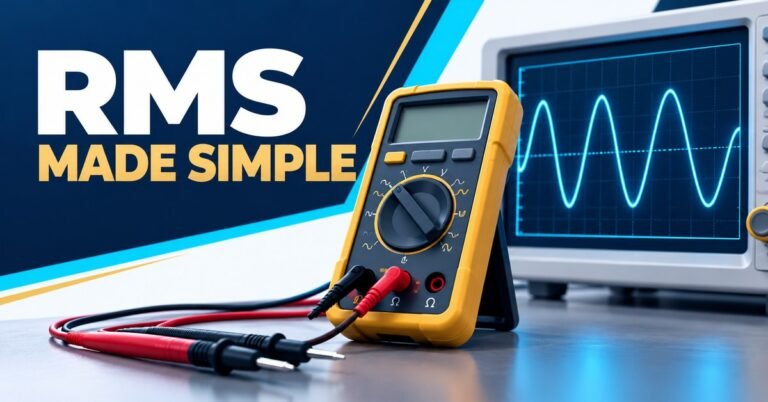
Understand RMS value, RMS voltage, and root mean square with sine-wave, square-wave, and pulse examples, plus practical tips for reading AC meters correctly.
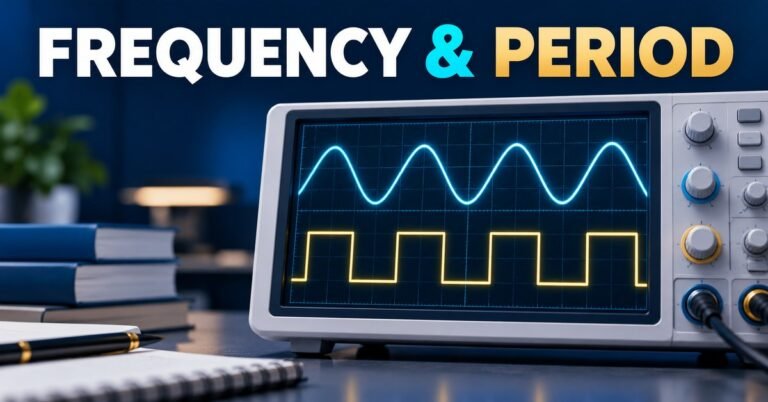
Understand frequency and period, sine waves, square waves, amplitude, and duty cycle with simple formulas, oscilloscope examples, and common mistakes explained.
Learn Thevenin's theorem and Norton's theorem with a worked voltage-divider example, equivalent circuit steps, source conversion, and common mistakes to avoid.