Power electronics is a major branch of electrical and electronics engineering that deals with the conversion, control, and conditioning of electrical power using electronic devices. It plays a key role in modern technology by enabling efficient use of electrical energy in various applications such as electric vehicles, renewable energy systems, industrial automation, and consumer electronics.
In simple terms, power electronics is the technology that controls and converts electrical power from one form to another using semiconductor devices. Unlike traditional electrical systems that rely on mechanical switches, power electronics uses fast electronic switching devices to achieve higher efficiency and better performance.
With the increasing demand for energy efficiency and smart control systems, power electronics has become one of the most important fields in engineering today.
What is Power Electronics?
Power electronics is the study and application of electronic devices and circuits for controlling and converting electrical power efficiently.
Simple Definition:
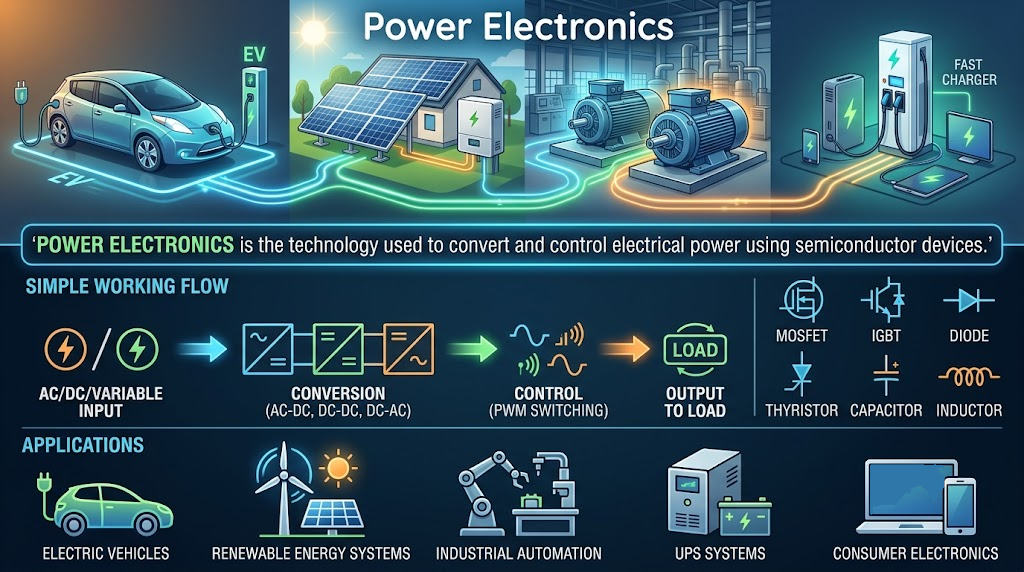
Power electronics is the technology used to convert and control electrical power using semiconductor devices such as diodes, thyristors, MOSFETs, and IGBTs.
Why is Power Electronics Important?
Power electronics is important because it:
- Improves energy efficiency
- Reduces power loss
- Enables renewable energy integration
- Controls electric motors effectively
- Supports modern industrial automation
- Makes electric vehicles possible
- Provides compact and reliable power systems
Without power electronics, modern energy systems would be inefficient and bulky.
Basic Components of Power Electronics
Power electronics systems use several semiconductor devices and circuit components.
1. Power Semiconductor Devices
These are the most important elements in power electronics.
a) Diodes
- Allow current in one direction
- Used in rectifiers
b) Thyristors (SCR)
- Used for controlled switching
- Suitable for high-power applications
c) MOSFETs
- Fast switching device
- Used in low to medium power applications
d) IGBTs (Insulated Gate Bipolar Transistor)
- Combines MOSFET and BJT advantages
- Used in high-power systems
2. Passive Components
- Inductors
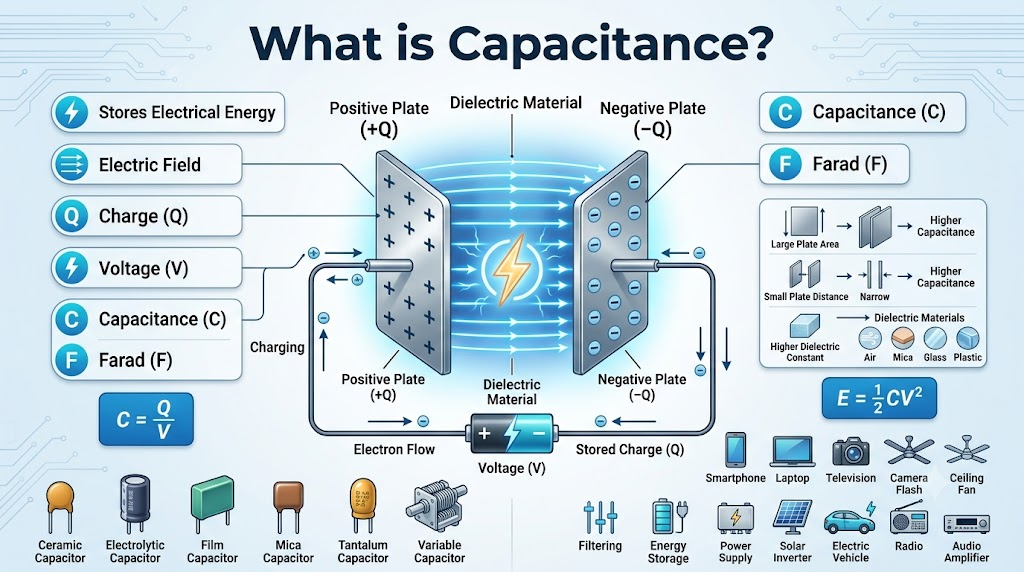
- Capacitors
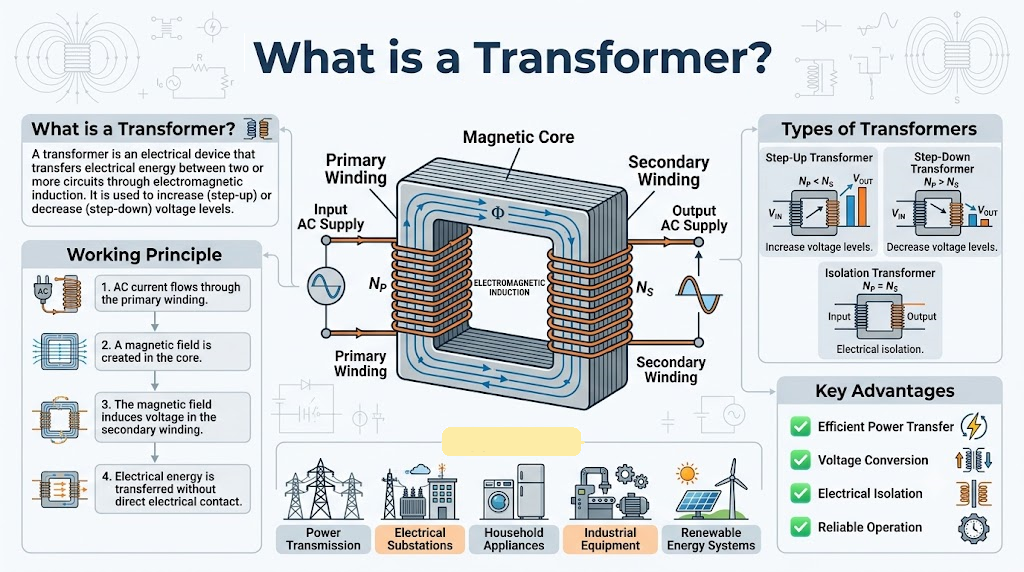
- Transformers
These help in energy storage, filtering, and voltage conversion.
3. Control Circuits
- Microcontrollers
- DSP processors
- PWM (Pulse Width Modulation) controllers
They regulate switching operations.
Types of Power Conversion
Power electronics deals with four major types of power conversion:
1. AC to DC Conversion (Rectification)
This process converts alternating current (AC) into direct current (DC).
Example:
- Mobile chargers
- Power supplies
Devices used:
- Diodes
- Rectifiers
2. DC to AC Conversion (Inversion)
This converts DC power into AC power.
Example:
- Solar inverters
- UPS systems
Devices used:
- MOSFETs
- IGBTs
3. DC to DC Conversion
This changes DC voltage levels.
Example:
- Laptop chargers
- DC motor control
Types:
- Buck converter (step-down)
- Boost converter (step-up)
4. AC to AC Conversion
This changes AC voltage or frequency.
Example:
- Speed control of AC motors
- Industrial drives
Working Principle of Power Electronics
Power electronics works on the principle of high-speed switching of semiconductor devices.
Instead of wasting power as heat (like in traditional resistive systems), power electronics devices switch ON and OFF rapidly to control energy flow efficiently.
Basic Working Steps:
Step 1: Input Power Supply
Electrical power is taken from AC or DC source.
Step 2: Conversion Stage
Power electronic devices convert the form of electricity (AC/DC, voltage level, frequency).
Step 3: Control Stage
Control circuits regulate switching using PWM or digital signals.
Step 4: Output Delivery
Controlled electrical power is delivered to the load such as motors, batteries, or electronic systems.
Key Devices Used in Power Electronics
1. MOSFET
- High-speed switching
- Used in low voltage systems
2. IGBT
- High power handling
- Used in industrial drives
3. Thyristor
- High voltage applications
- Used in power control systems
4. Diodes
- Basic rectification
- One-way current flow
Applications of Power Electronics
Power electronics is used in almost every modern electrical system.
1. Electric Vehicles (EVs)
- Battery charging systems
- Motor control
- Power management systems
Power electronics improves efficiency and range of EVs.
2. Renewable Energy Systems
- Solar inverters
- Wind energy converters
- Battery storage systems
It helps convert and control renewable energy efficiently.
3. Industrial Automation
- Motor drives
- Robotics
- Conveyor systems
Used for precise speed and torque control.
4. Consumer Electronics
- Mobile chargers
- Laptop adapters
- LED drivers
Ensures efficient power usage.
5. Power Supply Systems
- UPS (Uninterruptible Power Supply)
- SMPS (Switched Mode Power Supply)
- Voltage regulators
6. Railway Systems
- Electric traction systems
- Train speed control
7. Aerospace and Defense
- Radar systems
- Satellite power systems
- Aircraft power control
Advantages of Power Electronics
- High energy efficiency
- Compact system design
- Precise control of power
- Reduced energy loss
- Improved system performance
- Enables renewable energy integration
Limitations of Power Electronics
- Complex circuit design
- High initial cost
- Requires cooling systems
- Generates electromagnetic interference (EMI)
- Needs skilled design and control
Difference Between Conventional and Power Electronics Systems
| Feature | Conventional Systems | Power Electronics Systems |
|---|---|---|
| Efficiency | Low | High |
| Control | Mechanical | Electronic |
| Size | Large | Compact |
| Speed | Slow response | Fast switching |
| Energy Loss | High | Low |
Future of Power Electronics
The future of power electronics is highly promising due to growing energy demands and technological advancements.
Key trends include:
- Electric vehicles expansion
- Smart grids development
- AI-based power control systems
- Wide bandgap semiconductors (SiC, GaN)
- Renewable energy integration
These advancements will make power systems more efficient and intelligent.
Career Scope in Power Electronics
Power electronics offers excellent career opportunities in:
- Electrical engineering
- Renewable energy companies
- Automotive industry (EVs)
- Industrial automation
- Semiconductor industries
Job Roles:
- Power Electronics Engineer
- Design Engineer
- Control Systems Engineer
- Embedded Power Systems Engineer
Conclusion
Power electronics is a vital branch of engineering that focuses on efficient conversion and control of electrical power using semiconductor devices. It has transformed the way electrical energy is used in modern systems by making them more efficient, compact, and intelligent.
From electric vehicles and renewable energy systems to industrial automation and consumer electronics, power electronics plays a crucial role in almost every field of modern technology.
As energy demand continues to grow, power electronics will remain a key technology for building a sustainable and energy-efficient future.