


What is Surface Tension?
Surface tension is a property of the surface of a liquid that causes it to behave like a stretched elastic sheet. It happens because the molecules at the surface of the liquid are attracted to each other more strongly than the molecules in the middle of the liquid. This causes the surface to contract and form a sort of “skin” on the surface of the liquid.
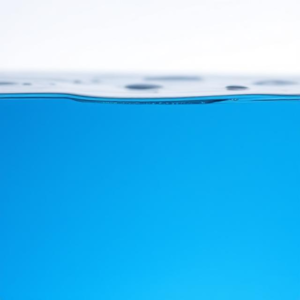
In simpler terms: Surface tension is the force that makes the surface of a liquid behave like a stretched rubber sheet, pulling the liquid molecules at the surface closer together.
Why Does Surface Tension Happen?
To understand this better, let’s break it down:
- Molecule Attraction:
- Molecules inside a liquid (like water) are surrounded by other molecules and are attracted to them from all sides.
- Molecules on the surface, however, don’t have other liquid molecules above them to attract them. So, these surface molecules are pulled more strongly by the molecules next to them, which creates an inward force.
- The “Skin” Effect:
- Because of this inward pull, the surface of the liquid acts like a stretched elastic film, trying to minimize its surface area and making it resistant to external forces.
Everyday Examples of Surface Tension
- Water Droplets:
- When water forms droplets, they tend to be round or spherical in shape. This is because surface tension pulls the molecules of water together, minimizing the surface area, and forming the most compact shape possible— a sphere.
- Insects Walking on Water:
- Some insects, like water striders, can walk on water because the surface tension of the water supports their weight. Their legs don’t break through the surface due to the “skin” created by surface tension.
- Bubbles:
- Soap bubbles are a great example of surface tension. The film of the bubble is created by a thin layer of water molecules between soap molecules. The surface tension holds the bubble together, and it forms a spherical shape.
- Capillary Action:
- When a small tube (like a capillary) is placed in a liquid, the liquid can move up the tube against gravity. This happens because of the surface tension of the liquid and its attraction to the walls of the tube, which helps pull the liquid upwards. This is how plants absorb water from the soil.
Formula for Surface Tension
The formula for surface tension (T) is:
Where:
- T = Surface tension (in newtons per meter, N/m)
- F = Force applied along the surface (in newtons, N)
- L = Length of the surface along which the force is applied (in meters, m)
Surface tension is measured by the force required to stretch or break the surface of a liquid.
Key Properties of Surface Tension
- Surface Tension is Higher in Some Liquids:
- Water has a relatively high surface tension compared to many other liquids, which is why water forms droplets and can support small insects on its surface.
- Effect of Temperature:
- Surface tension decreases as temperature increases. When the temperature of a liquid rises, the molecules move faster, and the attractive forces between them become weaker, reducing the surface tension.
- Effect of Surfactants:
- Surfactants (like soap or detergent) lower the surface tension of water. This is why soap is able to spread and clean more effectively. Surfactants reduce the “skin” effect and allow water to spread more easily over surfaces.
- Inward Force:
- Surface tension acts like a force that pulls the surface molecules inward, making the surface area of the liquid as small as possible.
Why is Surface Tension Important?
- In Nature: Surface tension helps insects walk on water and aids in processes like capillary action, which allows water to move up from the roots of plants to the leaves.
- In Technology: Surface tension is important in various scientific and engineering processes like inkjet printing, the formation of bubbles in carbonated drinks, and even in medical diagnostics (such as in blood tests).
- In Cleaning: The reduction of surface tension by soap or detergent helps water spread out and clean surfaces more effectively by allowing it to interact with dirt or grease more easily.
Simple Experiments to Observe Surface Tension
- Floating a Needle on Water:
- You can float a needle on the surface of water by placing it gently on the water. The surface tension holds the needle up, despite its weight, as long as it doesn’t break the surface.
- Water Droplets on a Coin:
- If you place a drop of water on a coin, you will notice that the drop doesn’t spread out immediately. Instead, the water droplet remains spherical due to surface tension.
Conclusion
Surface tension is a fascinating property of liquids that makes their surface behave like a stretched elastic film. It occurs due to the stronger attractive forces between molecules at the surface of the liquid. This “skin” effect is responsible for many everyday phenomena, like water droplets, insects walking on water, and bubbles. It plays a crucial role in various natural and industrial processes, making it an important concept in both physics and chemistry.
Tags: adhesion, bubble formation, capillary action, carbonated drinks, cleaning action, cohesion, cohesive forces, detergent, elastic sheet behavior, everyday examples, film formation, floating needle experiment, force per unit length, high surface tension in water, importance in nature, importance in technology, inkjet printing, insects walking on water, inward force, inward pull, liquid surface, medical diagnostics, minimize surface area, molecular attraction, molecule interaction, newtons per meter, plants absorbing water, reduced surface tension, role in chemistry., role in physics, skin effect, soap, soap bubbles, spherical shape, surface behavior, surface molecules, Surface Tension, surface tension formula, surfactants, T = F/L, temperature effect on surface tension, water droplets, water on coin, water striders