


Railway track health monitoring is a system designed to keep an eye on the condition of railway tracks to ensure they are safe and functional for trains to travel on. Just like how we need regular check-ups to stay healthy, railway tracks need constant monitoring to detect any problems before they cause accidents or delays. Let’s break it down simply!
1. What is Railway Track Health Monitoring?
Railway track health monitoring refers to using various tools and technologies to constantly check the condition of the tracks. The goal is to find any issues (like cracks, wear, or damage) early so they can be fixed before they cause problems for trains.
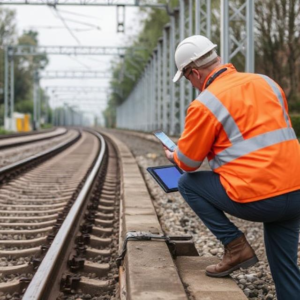
2. Why is Track Health Monitoring Important?
- Safety: Tracks need to be in good condition to avoid accidents like derailments, which could happen if a train encounters a weak or damaged part of the track.
- Efficiency: By detecting problems early, track health monitoring helps avoid delays and unplanned repairs, keeping trains running on time.
- Cost-Effective: Fixing small issues early is cheaper than fixing bigger, more serious problems later on.
3. How Does Track Health Monitoring Work?
There are several ways to monitor the health of railway tracks, including sensors, inspections, and specialized equipment. Here’s how they work:
a. Track Inspection Vehicles:
- How it Works: These are special trains or vehicles that travel along the tracks and use various sensors to check the track’s condition. These vehicles can detect things like track alignment, wear, cracks, or other damage.
- Why it’s Important: Track inspection vehicles allow railway companies to monitor large sections of track quickly and efficiently.
- Example: These vehicles may have cameras, lasers, and other sensors to measure how level the track is or to detect cracks in the rails.
b. Ultrasonic Testing:
- How it Works: This method uses sound waves to detect cracks or faults inside the rails. A sensor sends out sound waves, and if there’s a crack or break in the track, the sound waves will reflect back differently, revealing the problem.
- Why it’s Important: It helps find problems that may not be visible on the surface, like hidden cracks in the metal.
- Example: An ultrasonic device can be attached to an inspection vehicle or a handheld device used by maintenance workers to check for hidden cracks or damage.
c. Vibration and Strain Sensors:
- How it Works: Sensors are placed along the track to measure vibrations and strain (the force exerted on the track). These sensors can detect when the track is under stress or when there’s abnormal movement, which could indicate damage or misalignment.
- Why it’s Important: Vibration and strain sensors give real-time information about how the track is handling the weight and movement of trains, helping to spot issues before they become serious.
- Example: If the track starts to bend or warp under pressure, these sensors will detect the change and send a warning.
d. Track Geometry Monitoring:
- How it Works: This involves measuring the physical alignment of the track, such as its straightness, the distance between the rails, and the angle of the track. Any misalignment can be detected and corrected.
- Why it’s Important: Misaligned tracks can lead to train derailments or cause excessive wear on trains.
- Example: Track geometry monitoring devices can be mounted on trains or inspection vehicles to measure how much the track has shifted over time and whether it needs adjustment.
e. Temperature and Weather Sensors:
- How it Works: Temperature and weather sensors are used to monitor conditions like track temperature, humidity, and weather-related changes that might affect the track’s health. Extreme temperatures (either hot or cold) can cause the track to expand or contract, leading to potential problems.
- Why it’s Important: Monitoring these factors helps track maintenance teams prepare for extreme weather conditions and prevent damage due to things like heat waves or freezing temperatures.
- Example: In extremely hot weather, the rails can expand and buckle, so monitoring the temperature of the track can help decide when to take action.
f. Automatic Crack Detection Systems:
- How it Works: Cameras and sensors are used to automatically detect cracks or surface damage in the track. These systems can be mounted on trains or fixed to the track.
- Why it’s Important: It speeds up the process of detecting issues that might otherwise be missed in regular visual inspections.
- Example: A camera-based system can quickly identify small cracks in the track that might grow into bigger problems, allowing for quicker repairs.
4. How is Data Collected and Used?
All the data from these sensors and inspection systems is collected and sent to a central system where it is analyzed. Here’s how it works:
- Real-Time Monitoring: Data is sent in real time from sensors to control centers or maintenance teams, allowing them to monitor the track’s health as the train or inspection vehicle moves along it.
- Analysis: The data is analyzed to look for any abnormalities, such as cracks, misalignment, or damage.
- Alert System: If a problem is detected, an alert is sent to maintenance teams or control centers, who can then schedule repairs before the issue causes a safety risk or delay.
5. Advantages of Track Health Monitoring:
- Increased Safety: Early detection of problems prevents accidents like derailments or other track-related incidents.
- Cost Savings: Monitoring track health reduces the need for expensive emergency repairs by allowing small issues to be addressed before they become bigger problems.
- Efficiency: It helps ensure that trains run smoothly, preventing delays caused by track damage or failure.
- Proactive Maintenance: Track health monitoring makes it easier to plan maintenance ahead of time, instead of reacting to sudden breakdowns.
6. Challenges of Track Health Monitoring:
- High Cost: Setting up and maintaining the equipment used for track monitoring can be expensive for railway companies.
- Complexity: Analyzing and interpreting the large amount of data generated by the monitoring systems can be complex and requires specialized knowledge and tools.
- Weather Effects: Extreme weather can affect sensors and systems, sometimes making it harder to collect accurate data.
- Maintenance of Equipment: The monitoring tools themselves need to be maintained and calibrated regularly to ensure accurate readings.
7. In Summary:
Railway track health monitoring is all about keeping the tracks in good condition so that trains can travel safely and efficiently. Using various technologies, like ultrasonic testing, sensors, and inspection vehicles, railway companies can detect problems early and prevent accidents or delays. By continuously monitoring the track’s health, maintenance teams can identify issues before they become serious, saving time, money, and, most importantly, ensuring passenger safety.
Keywords: Railway track health monitoring, Railway