

Skip to content
EasyEngineeringHub Logo

Welcome to EasyEngineeringHub

☰
🔍
🔔
🔍
  • Home
  • Tutorials
    Electronics Computer Science Mechanical Physics Skill Development
  • Quiz
    Electronics Quiz CS Quiz Physics Quiz Mechanical Quiz Professions Quiz
  • Blogs
    Electronics Computer Science Mechanical Physics General Knowledge Education & Personal Development
  • Resources
    Course Index Project Hub Data Analysis JobQuest Careers AI Tools
🔔
  • Home
  • Tutorials
    Electronics Computer Science Mechanical Physics Skill Development
  • Quiz
    Electronics Quiz CS Quiz Physics Quiz Mechanical Quiz Professions Quiz
  • Blogs
    Electronics Computer Science Mechanical Physics General Knowledge Education & Personal Development
  • Resources
    Course Index Project Hub Data Analysis JobQuest Careers AI Tools

Empowering engineering students with clear, foundational knowledge to master key concepts and succeed academically and professionally.

×
×
Easy Engineering Hub Logo Subscribe to EasyEngineeringHub

Thank You!

Thank you for subscribing to EasyEngineeringHub.

Indian Railways Organization and Structure Explain

BY ADMIN February 14, 2025

Indian Railways Organization and Structure

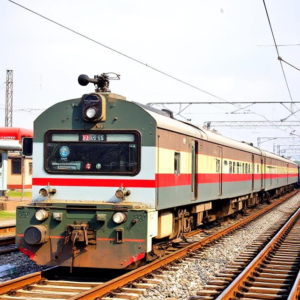
Indian Railways is one of the largest railway systems in the world, and its organization and structure are built to manage its vast network and operations efficiently. It is a government-owned enterprise and plays a crucial role in transporting millions of passengers and goods every day.

Let’s break down how Indian Railways is organized and how it works in simple terms:
 

1. Indian Railways Overview

Indian Railways is responsible for managing and operating the rail network across India, covering over 67,000 kilometers of track and running around 13,000 trains daily. It operates both passenger services (like trains for commuting) and freight services (for transporting goods).

It is one of the world’s largest employers, with around 1.3 million employees. Indian Railways is a government-owned entity under the Ministry of Railways, which means it is controlled and funded by the Indian government.

2. Key Components of Indian Railways

Indian Railways is structured in a way that allows it to handle its vast network of trains, stations, tracks, and operations. Here are the key components of its organization:

a. Ministry of Railways

  • The Ministry of Railways is the highest governing body that oversees all activities related to Indian Railways. It is headed by the Union Minister of Railways, who is appointed by the Government of India.
  • The Ministry formulates policies, makes decisions on investments, and sets the overall direction for the rail network. The Minister of Railways is supported by senior officials, including the Secretary of the Ministry of Railways.

b. Railway Board

  • The Railway Board is the governing body of Indian Railways, responsible for the overall management, decision-making, and coordination of all railway activities.
  • The Chairman of the Railway Board is the highest-ranking officer, and under the Chairman, there are several members who look after different functions like operations, safety, finance, and civil engineering.
  • The Railway Board works under the Ministry of Railways and acts as the main decision-making body for Indian Railways.

3. Divisions of Indian Railways

Indian Railways is divided into several zones and divisions, each responsible for managing specific regions and operations. This decentralized structure helps manage the large network efficiently.

a. Zones

  • Indian Railways is divided into 18 zones (such as North Western Railway, Eastern Railway, Southern Railway, etc.). Each zone is like a major region and has a General Manager (GM) who oversees the operations within that zone.
  • These zones are spread across the country, ensuring that railways reach all parts of India, from the north to the south and east to west.

b. Divisions

  • Each zone is further divided into divisions, which are smaller administrative units. There are a total of 70 divisions in Indian Railways.
  • Each division is headed by a Divisional Railway Manager (DRM), who is responsible for the operations within that division. For example, the Mumbai Division falls under the Western Railway Zone.

4. Functional Units of Indian Railways

Indian Railways has several functional units that handle specific tasks such as train operations, track maintenance, safety, and infrastructure development. Here’s how the work is divided:

a. Operations

  • The Operations department manages the day-to-day running of passenger and freight trains. It ensures that trains run on time, and resources like locomotives and coaches are properly allocated.
  • It also manages train schedules, stations, and train tickets.

b. Engineering

  • The Engineering department handles the construction, maintenance, and repair of railway tracks, bridges, stations, and other physical infrastructure.
  • It is responsible for ensuring that the rail network is safe and well-maintained.

c. Mechanical

  • The Mechanical department takes care of all trains, including locomotives, coaches, and wagons.
  • It handles the maintenance of rolling stock (trains), ensuring that the trains are in good condition and running smoothly.

d. Electrical

  • The Electrical department deals with the electrical systems of Indian Railways. This includes the electrification of railway tracks, the operation of electric trains, and the supply of electricity to railway stations.
  • It also manages the signals and telecommunication systems used to ensure train safety and coordination.

e. Commercial

  • The Commercial department is responsible for generating revenue for Indian Railways. It manages ticket sales, freight charges, onboard services like catering, and station retail activities.
  • This department ensures that the railway network remains financially sustainable by managing income from passenger fares, freight, and services.

f. Safety and Security

  • The Safety department is dedicated to ensuring the safety of passengers, employees, and freight. It sets safety standards, conducts safety inspections, and ensures that all safety protocols are followed.
  • Railway Protection Force (RPF) and Government Railway Police (GRP) handle the security of stations, trains, and passengers.

g. Human Resources (HR)

  • The Human Resources department takes care of recruiting, training, and managing the workforce of Indian Railways. It handles employee welfare, promotions, and staff benefits.
  • Given the large workforce, HR plays a crucial role in managing the employees efficiently.

5. Key Positions in Indian Railways

Several important positions are part of the hierarchy in Indian Railways to ensure smooth operations:

  • Chairman of the Railway Board: The highest officer in Indian Railways, overseeing the entire organization.
  • General Manager (GM): Heads each zone of Indian Railways.
  • Divisional Railway Manager (DRM): Heads each division and manages daily operations in that region.
  • Station Master: In charge of managing a railway station, coordinating the arrival and departure of trains, and ensuring passenger safety.
  • Locomotive Driver: Operates the train and ensures safe travel.
  • Ticket Collector: Ensures that passengers have valid tickets and assists with the safety and orderliness of the train.
  • Safety Officers: Ensure safety measures are followed, and accidents are minimized.
  • Civil Engineers, Mechanical Engineers, and Electrical Engineers: Work on building and maintaining infrastructure and trains.

6. Railway Zones and Their Responsibilities

Each zone in Indian Railways is further divided into divisions and has specific duties based on the geography and operational requirements of that region. Some major railway zones include:

  1. Northern Railway (NR): Covers areas like Delhi, Haryana, Punjab, and Jammu & Kashmir.
  2. Southern Railway (SR): Covers states like Tamil Nadu, Kerala, Andhra Pradesh, and Karnataka.
  3. Western Railway (WR): Covers Gujarat, Maharashtra, and Rajasthan.
  4. Eastern Railway (ER): Covers West Bengal, Bihar, and Jharkhand.
  5. South Eastern Railway (SER): Includes Odisha, West Bengal, Jharkhand, and Bihar.

Each zone ensures that trains run smoothly, stations are managed efficiently, and track maintenance is done regularly.

7. Conclusion

In short, Indian Railways is a vast and complex organization with a clear structure to manage its operations. At the top, the Ministry of Railways and the Railway Board oversee the entire organization, while at the ground level, zones and divisions are responsible for specific regions. Different functional departments like operations, engineering, safety, and HR ensure the smooth functioning of the rail network. With such a large and diverse setup, Indian Railways manages to transport millions of passengers and goods across the country every day.
Keywords: Indian Railway, Railway

Tags: 21st Century Innovations, Accident Investigation, advanced communication systems., Advanced Signaling for High-Speed Rail, Advanced Track Switching, Advanced Train Control, Advanced Weather Monitoring, Advancements in Signaling, Age of Automation, Annual Budget Forecasting, Anti-Accident Technologies, Artificial Intelligence, Automated Ticketing, Automatic Train Identification (ATI), Automatic Train Operation (ATO), Behavioral Analytics, Big Data Analytics, Big Data in Railway Management, Border Security, Border Security and Control, Budget and Funding, carbon footprint reduction, Cargo and Containerization, Challenges and Opportunities, Challenges Faced, Challenges in Freight Management, Challenges in Hilly Areas, Challenges of Electric and Diesel Engines Integration, Civil Services Examinations, Cleanliness Initiatives, Coal Transport, Collaboration with Startups, collision avoidance, Collision Prevention Technology, Comfort Systems, Commercial Development, Communication Protocols, community engagement, Connected Logistics Hubs, Construction and Engineering, Construction of Railway Bridges, continuous improvement, Corporate Social Responsibility (CSR), crisis management, Cross-Border Communication, Crowd Management, Customer Service Innovations, Cybersecurity, data analytics, Data Communication Systems, Data encryption, data privacy, Dedicated Freight Corridors (DFC), Dedicated Passenger Corridors, Design and Architecture of Stations, Development of Railway Coaches, Digital Communication, Digital Infrastructure Development, digital innovation, Digitization of Operations, Disaster Management Communication, Division Structure, Eco-Friendly Rail Projects, Eco-Tourism, Economic Growth Role, economy, Education, Education and Research Centers, Education and Skill Development, Electric Train Propulsion, Electrification Systems, Electronic Gate Systems, Electronic Signaling, Elevated Rail Corridors, Emergency Alert Systems, emergency response, Emergency Response Systems, emergency services, Emergency Systems, Energy Efficiency, Environment Conservation, Environmental Conservation, Environmental Protection, environmental regulations, Export of Railway Equipment, facial recognition, fiber optic communication, Financial Strategies, food security, Freight and Logistics Solutions, Freight Services, Freight Services for Agriculture, Freight Tracking Systems, funding, Future of Indian Railways, Future of Mobility, future technologies., gender equality, Geographical Distribution of Railway Zones, Global Recognition, Government Policies, GPS Train Tracking, Green Initiatives, Healthcare, Heavy Goods Transport, Historical Milestones, History and Evolution, Housing Development Projects, Impact of Train Accidents, Impact on Agriculture, Impact on Indian Politics, Impact on Industrial Growth, Indian Railway, Indian Railway Policies, Indian Railway Services, Indian Railways Global Context, Indian Railways Services, Industrial Clusters, Infrastructure, Infrastructure Challenges, infrastructure development, Infrastructure Financing, Initiatives, innovation, Innovation and Research, Innovation in Train Scheduling, Innovations in Communication, Innovations in Passenger Security, Integrated Traffic Control, Integration with Other Transport Modes, intelligent transportation systems, International Collaboration, International Comparisons, International Exhibitions, International Projects, international trade, IoT integration, IRAS, IRPS, IRSE, IRSS, IRTS, Job Creation Programs, job opportunities, Job Profiles, Land Acquisition Challenges, Land Leasing, Logistics Partnerships, Long-Distance Travel Challenges, Long-Term Vision, Low-Cost Rail Travel Initiatives, Maintenance Centers, Maintenance of Stations, Maintenance Practices, Managing Migration, minerals, Mobile Communication Networks, Modernization of Coaches, Modernization Projects, Museums, National Defense, National Railways Development Corporation (NRDC), national security, Natural Disasters, Network Interference, network optimization, New Lines in Remote Areas, New Projects, Noise and Vibration Reduction, Noise Monitoring, oil, Onboard Data Logging, operations, Organization and Structure, Parcel Services, Passenger and Freight Services, Passenger Complaint Management, Passenger Feedback, Passenger Safety, Passenger Security, Personnel Training, Pilgrimage Trains, Private Investments, Private Sector Participation, Projects and Funding, Public Awareness Programs, public engagement, Public Health Programs, Public Safety at Stations, public transport, public-private partnerships, Punctuality, Rail Budget vs General Budget, Rail Safety Education, Railway and Aviation Integration, Railway Communication Networks (GSM-R), Railway Electrification, Railway Engineering, Railway Line Expansion, Railway Recruitment, Railway Recruitment Board Exams, Railway Simulation Systems, Railway Theories, Railway Ticketing Fraud Prevention, Railway Tourism, Railway-Based E-Commerce, Railway's Impact on Urbanization, Railways and Supply Chain Management, Real-Time Location Monitoring, Recruitment, Regional Development, Regional Economic Impact, remote control systems, research and development, RFID Implementation, Road Safety Integration, Robust Communication in Remote Areas, Role During Festivals, Role During Natural Disasters, Role in Export Economy, Role in National Integration, Role in Urbanization, Role of 5G, Role of Railway Zones, rural connectivity, rural development, Safety and Accident Prevention Systems, Safety and Security Policy Initiatives, Safety Engineering, Safety Features, Safety Initiatives, Safety Protocols, safety systems, Safety Technologies, Satellite communication, Satellite-Based Positioning, Security, Semi-High-Speed Rail, Signal and Switch Automation, signal synchronization, Signaling Systems, Signals and Communication Systems, Smart Coaches, Smart Grid Integration, smart infrastructure, Smart Logistics Centers, Smart Rail Track Systems, Smart Railway Stations, Smart Railways Technology, Smart Stations, social impact, social welfare, society, Station Redevelopment Projects, Station Upgrades, Station-Integrated Shopping Malls, Studies, Summary of Indian Railways, Supply Chain Management Role, surveillance, Sustainability, Technologies, Technology and Automation in Maintenance, Technology in Safety, Telecommunication networks, Theft and Vandalism Prevention, Track Circuit Systems, Track Gauge System, Track Health Monitoring, Track Inspection Communication, Trackbed Monitoring, Traffic Flow Management, traffic management, Train Communication Systems, Train Condition Monitoring, Train Data Recording, Train Engine Design, Train Monitoring Systems, Train Positioning Systems, Train Power Systems, Train Running Time, Train Signaling and Control Systems., Train Station Security Systems, Train Timetable Management, Train Tracking and Positioning, Train Types in India, Train Weight Detection, Train-to-Trackside Communication, Training and Skill Development, Trains and Stations, Trains for Students, Transportation of Agricultural Products, tunnels, Types of Trains, Use of Drones, waste management, water conservation, Wheel and Axle Monitoring, workforce development, workforce training, Workshop Modernization, workshops, Workshops and Production Units, Zones and Divisions

Post navigation

Railway-Based Industrial Clusters and Economic Zones Explain
Railway Budget and Funding : Explain

Recent Posts

  • The Impact of Education on Personal and Social Development
  • Career Planning and Development: Foundations for a Successful Future
  • Internships: Where Your Career Journey Begins
  • Building Your Career: Resume Writing and Job Interview Tips
  • Skills for the Future: Global Strategies for Employment Growth

Recent Comments

No comments to show.

Archives

  • May 2025
  • April 2025
  • March 2025
  • February 2025
  • January 2025
  • December 2024

Categories

  • AC Circuits
  • Advanced Digital Techniques
  • Advanced Electronics Components
  • Advanced VLSI Technologies
  • Amplifiers
  • Basics Electronics
  • Cellular Networks
  • Circuit Analysis and Simulation
  • Circuit Basics
  • Circuit Design Techniques
  • Circuit Theory and Design
  • Circuits
  • Communication Systems
  • Computer Science
  • Connectivity Modules
  • Control System
  • DC Circuits
  • Design
  • Digital Design
  • Digital Electronics
  • Digital Fundamentals
  • Diode
  • E-commerce
  • Economic Growth
  • Education & Personal Development
  • Electrical
  • Electricity
  • Electromechanical
  • Electronic Design and Manufacturing
  • Electronics
  • Embedded Systems
  • Energy
  • Environment
  • General Knowledge
  • Health Care
  • Indian Government
  • Integrated Circuits
  • Magnetic Materials
  • Material Science
  • Measuring instruments
  • Mechanical
  • Memory and Storage
  • Microcontrollers
  • Network Security
  • Optical Communication
  • Optoelectronics
  • Oscillators
  • Other Components
  • PCB Design
  • Physics
  • Power Electronics and Energy Systems
  • Railway
  • Rectifiers and Filters
  • RF Electronics
  • Secure Communication Protocols
  • Semiconductor Basics
  • Sensors
  • Signal conversion
  • Skill Development
  • Specialized Components
  • Thermal Management
  • Transistors
  • Uncategorized
  • Vision Systems
  • VLSI (Very-Large-Scale Integration)
  • Waveforms
  • Privacy Policy
  • Disclaimer
  • Terms & Conditions
  • Home
  • Contact Us
  • About Us

© 2025 All Rights Reserved | easyengineeringhub.in

↑