


Indian Railways plays a very important role in food security in India. Food security means that people have access to enough safe, nutritious food to live a healthy life. Indian Railways helps make this possible by ensuring the efficient movement of food items across the country. Let’s explore how Indian Railways helps in food security in an easy way:
1. Transporting Essential Food Supplies
One of the most important ways Indian Railways helps food security is by transporting food products across the country.
How It Works:
- Grain Transportation: Indian Railways moves large quantities of grains (like wheat, rice, and pulses) from producing states to consuming areas where food is needed. For example, grains grown in states like Punjab or Haryana are transported to different parts of India where there is higher demand.
- Fruits and Vegetables: Indian Railways also transports perishable food items, such as fruits, vegetables, and milk products, ensuring that these reach markets quickly before they spoil.
- Bulk Food Items: It carries bulk quantities of essential items such as sugar, salt, and oil for distribution throughout the country.
Impact:
- Ensures that food reaches everywhere in India, even to the farthest, most remote areas.
- Makes sure that food items are available year-round by helping in their quick transportation and storage.
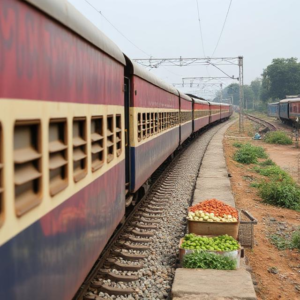
2. Providing Reliable and Efficient Transport for Food Products
Indian Railways offers a reliable transport system that helps food products travel safely and on time.
How It Works:
- Specialized Trains (Like Rake Trains): Indian Railways uses special rake trains for transporting food products. These trains are specifically designed for carrying bulk goods, including food. Some container trains are also used to carry perishable goods in a safe, temperature-controlled environment.
- Faster Delivery: Railways can carry large amounts of food across long distances more quickly than other modes of transport, like trucks or ships. This helps food reach markets on time.
Impact:
- Ensures food reaches markets without delay, preventing shortages.
- Helps to keep food prices stable by ensuring a steady supply.
3. Helping with Food Distribution During Emergencies
Indian Railways plays a key role in ensuring that food can be quickly distributed during emergencies, like natural disasters or situations where there are shortages.
How It Works:
- Disaster Relief: In times of natural disasters like floods or earthquakes, Indian Railways helps transport emergency food supplies to affected areas. For example, after floods, relief food packets are delivered to regions that need immediate help.
- Food Distribution Programs: The government uses railways to distribute food under schemes like the Public Distribution System (PDS). This ensures that essential food items reach the poorest sections of society.
Impact:
- Quick response to food shortages in emergencies, providing relief to people who need it.
- Helps in reaching remote areas with emergency food supplies.
4. Supporting the Supply Chain for Food Processing Industries
Indian Railways also supports food processing industries, which are essential for food security.
How It Works:
- Raw Materials Transport: It helps transport raw materials used in food processing, like wheat for flour mills or fruits and vegetables for canning. Once processed, the finished food products are sent to markets across the country.
- Packaging and Distribution: Processed food, such as packaged food items, is also carried by railways to ensure it reaches customers efficiently.
Impact:
- Supports the growth of food industries, creating more jobs and increasing food production.
- Ensures a steady supply of processed food products, making food more accessible to people.
5. Promoting Storage and Preservation of Food
Indian Railways helps in storing and preserving food to ensure that it doesn’t go to waste.
How It Works:
- Refrigerated Railcars: For perishable goods (like fruits, vegetables, and dairy), Indian Railways uses refrigerated railcars that maintain the right temperature. This keeps the food fresh during long-distance transport.
- Cold Storage Facilities: Some railway stations have cold storage facilities where food items can be temporarily stored until they are moved to their final destination.
Impact:
- Helps to reduce food wastage by ensuring that perishable food items remain fresh.
- Extends the shelf life of perishable products, allowing them to be distributed over longer periods.
6. Supporting Agricultural Exports
Indian Railways also plays a role in exporting food to other countries, which helps the country’s economy and food security.
How It Works:
- Food Export Trains: Indian Railways helps transport food items like fruits, vegetables, rice, and spices to ports where they can be shipped abroad.
- Efficient Export Routes: Railways help in fast and efficient export by moving food products from farms to ports in a reliable and timely manner.
Impact:
- Boosts the economy by contributing to the export of agricultural products.
- Helps ensure global food security, as Indian food products are supplied to other countries.
7. Linking Farmers to Markets
Indian Railways also helps connect farmers with markets, which is crucial for food security.
How It Works:
- Farm-to-Market Connectivity: Railways provide a cost-effective way for farmers to send their produce from rural areas to urban markets. This ensures that farmers can sell their products at fair prices.
- Reducing Middlemen: By using trains to move food directly from farmers to marketplaces, the role of middlemen is reduced, ensuring better prices for both farmers and consumers.
Impact:
- Better access to markets for farmers, ensuring they can sell their produce.
- Helps stabilize food prices by creating an efficient supply chain from farm to market.
In Summary:
Indian Railways plays a huge role in food security in India by:
- Transporting food efficiently across the country, ensuring everyone has access to essential food items.
- Providing reliable and fast transport for food products, ensuring timely delivery.
- Helping in emergency food distribution during disasters or shortages.
- Supporting the food processing industry by moving raw materials and finished products.
- Using refrigerated railcars and cold storage to preserve perishable goods and prevent food waste.
- Supporting the export of food products to other countries, boosting India’s economy.
- Connecting farmers to markets, ensuring they can sell their produce at fair prices and consumers have access to fresh food.
Through these efforts, Indian Railways helps ensure that food is available to everyone, contributing to the food security of India.
Keywords: Indian Railway, Railway