


What Are Green Initiatives?
Green initiatives are actions and projects that focus on protecting the environment and reducing harm to nature. Indian Railways, being one of the biggest transportation networks in the world, has been taking several steps to reduce its carbon footprint, use clean energy, and protect the environment.
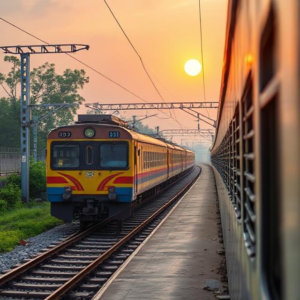
1. Switching to Renewable Energy (Solar and Wind Power)
Indian Railways has made a huge shift toward using renewable energy like solar and wind power to run its trains and stations.
Key Points:
- Solar Panels: Indian Railways has installed solar panels on train roofs, station buildings, and railway offices to generate clean energy. This reduces the need for electricity from non-renewable sources like coal and gas.Example: The Indian Railways runs trains like the Shatabdi Express using solar-powered trains.
- Wind Power: Railways have also started using wind energy at certain locations to power trains and stations.
Impact:
- It helps in reducing dependence on fossil fuels (like coal and oil).
- It cuts down on greenhouse gas emissions (like carbon dioxide).
- It makes railways more sustainable and eco-friendly.
2. Electric Trains and Electrification
Indian Railways is electrifying its railway network, replacing diesel-powered trains with electric trains that are more energy-efficient and produce less pollution.
Key Points:
- By electrifying railway tracks, more trains run on electricity instead of diesel, reducing the carbon footprint.
- Electric trains are faster, cheaper, and better for the environment because they produce less pollution compared to diesel engines.
Impact:
- This helps reduce air pollution and reliance on fossil fuels.
- It supports the government’s goal of transitioning to clean energy for transportation.
3. Environmentally Friendly Stations
Indian Railways has also made efforts to make railway stations more green and environmentally friendly.
Key Points:
- Green Buildings: Many railway stations have adopted the concept of green buildings, which use energy-efficient designs and sustainable materials.Example: The Habibganj Station in Bhopal has been designed as an eco-friendly station with solar panels, rainwater harvesting, and LED lighting.
- Waste Management: Railways have set up systems to manage waste properly at stations. They focus on reducing, reusing, and recycling waste materials.
Impact:
- Reduces energy use at stations.
- Helps manage waste in a sustainable way.
4. Water Conservation
Indian Railways has started focusing on saving water and using it efficiently in its stations and trains.
Key Points:
- Water Recycling: Many stations and trains now have water recycling systems, which purify used water for reuse in toilets and other purposes.
- Rainwater Harvesting: Several railway stations have implemented rainwater harvesting systems to capture rainwater and use it for station needs like landscaping, cleaning, and toilets.
Impact:
- Helps in reducing water wastage.
- Supports sustainable water management practices.
5. Use of Bio-toilets
Indian Railways has introduced bio-toilets on many of its trains to reduce pollution and the spread of diseases.
Key Points:
- Bio-toilets use natural biological processes to treat human waste. The waste gets converted into biogas and compost, which are eco-friendly by-products.
- These toilets help prevent the discharge of waste into tracks, which can pollute the environment.
Impact:
- Reduces environmental pollution caused by waste.
- Helps in improving sanitation on trains and stations.
6. Tree Plantation Drives
Indian Railways also engages in tree plantation drives to contribute to a greener environment.
Key Points:
- Railways plant trees along railway tracks and in stations to reduce carbon emissions and provide green cover.Example: Railways have planted thousands of trees across various regions of India to create greener surroundings and improve air quality.
Impact:
- Helps in increasing green cover.
- Reduces air pollution and enhances the environment around railway areas.
7. Energy-Efficient Lighting and Systems
Indian Railways has shifted to energy-efficient lighting systems in stations and trains to save electricity.
Key Points:
- LED lights are used extensively, which consume less power and have a longer lifespan compared to traditional lighting.
- Efficient Train Systems: The use of energy-efficient train designs and modern technology helps reduce overall power consumption.
Impact:
- Helps reduce energy consumption and electricity bills.
- Contributes to overall environmental sustainability.
8. Green Train Corridors
Indian Railways has created special green corridors for some trains, where they use eco-friendly practices like solar power and electricity for running trains.
Key Points:
- These corridors are designed to ensure that trains operate in the most sustainable manner possible, with minimal environmental impact.
Impact:
- Promotes sustainability in rail transport.
- Reduces pollution along key routes.
In Summary:
Indian Railways has taken many steps to make itself environmentally friendly:
- It uses solar energy and wind power.
- It is focusing on electric trains to reduce pollution.
- Stations are being designed to be green and energy-efficient.
- It practices water conservation and waste management.
- Bio-toilets are being installed to reduce pollution.
- Indian Railways is working on reducing energy consumption through LED lights and energy-efficient systems.
These initiatives help reduce pollution, make better use of resources, and protect the environment for future generations. Indian Railways is moving towards a greener, cleaner future! 🌱🚆
Keywords: Indian Railway, Railway