


Famous Landmarks in the World: A Simple Guide
Landmarks are iconic structures or natural sites that are often recognized globally. They hold historical, cultural, or architectural significance and attract millions of visitors each year. Some landmarks symbolize entire countries, while others represent amazing feats of human engineering or nature’s beauty. Here’s a look at some of the most famous landmarks in the world and what makes them so special.
1. The Great Wall of China (China)
The Great Wall of China is one of the most famous and impressive man-made structures in the world. Stretching over 13,000 miles, it was built to protect China from invasions. Construction began more than 2,000 years ago during the Qin Dynasty, and the wall was extended by later dynasties.
- Significance: The Great Wall is not only a symbol of China’s ancient history but also of determination and defense. It stands as a remarkable achievement in engineering and architecture.
- What Makes It Special: The wall is made of different materials depending on the region, including wood, brick, and stone. It is a UNESCO World Heritage site and is often considered one of the “New Seven Wonders of the World.”
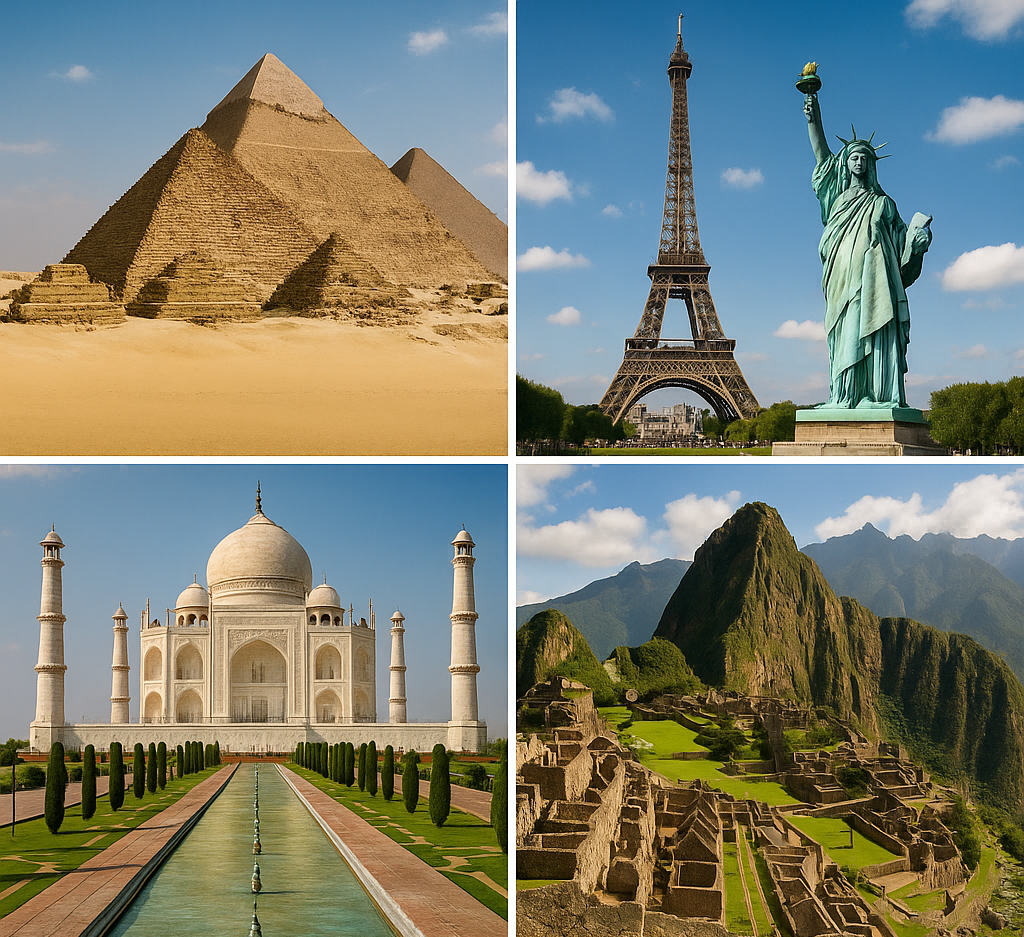
2. The Eiffel Tower (France)
Located in Paris, the Eiffel Tower is one of the most recognizable structures in the world. It was designed by engineer Gustave Eiffel and was originally built as the entrance arch for the 1889 World’s Fair in Paris.
- Significance: The Eiffel Tower represents France’s artistic and engineering brilliance. At 330 meters (1,083 feet), it was the tallest structure in the world until the Chrysler Building was completed in New York City in 1930.
- What Makes It Special: Made of wrought iron, the Eiffel Tower is a stunning feat of engineering. It is an enduring symbol of French culture and attracts millions of tourists each year. You can even go to the top and enjoy breathtaking views of Paris.
3. The Pyramids of Giza (Egypt)
The Pyramids of Giza, especially the Great Pyramid, are among the oldest and most recognizable monuments in the world. Built around 4,500 years ago as tombs for the Pharaohs, these massive stone structures stand in the desert near Cairo.
- Significance: The Pyramids are incredible examples of ancient Egyptian engineering and are the last surviving wonder of the Seven Wonders of the Ancient World.
- What Makes It Special: The Great Pyramid was the tallest man-made structure in the world for over 3,800 years. Its construction remains a mystery, with many wondering how the ancient Egyptians moved such massive stones without modern machinery.
4. The Colosseum (Italy)
The Colosseum in Rome is a giant amphitheater that was once used for gladiatorial contests and public spectacles. Built in the 1st century AD, it could hold up to 50,000 spectators.
- Significance: The Colosseum is an iconic symbol of Ancient Rome and its grand architectural style. It reflects the culture and entertainment of the Roman Empire, where public entertainment was highly valued.
- What Makes It Special: Despite being damaged by earthquakes and looting, the Colosseum remains an impressive example of Roman engineering and a popular tourist attraction today. It’s a UNESCO World Heritage site and continues to be one of the most visited landmarks in Italy.
5. The Statue of Liberty (USA)
Located on Liberty Island in New York Harbor, the Statue of Liberty is a gift from France to the United States, symbolizing freedom and democracy. It was designed by French sculptor Frédéric Auguste Bartholdi and dedicated in 1886.
- Significance: The Statue of Liberty is a symbol of the United States, welcoming immigrants and visitors to the country. It’s recognized worldwide as an emblem of liberty and human rights.
- What Makes It Special: Standing at 305 feet (93 meters) tall, the statue holds a torch in one hand and a tablet inscribed with the date of the U.S. Declaration of Independence in the other. It’s a beacon of hope and freedom for many.
6. Machu Picchu (Peru)
Machu Picchu is an ancient Incan city located high in the Andes Mountains in Peru. It was built in the 15th century and abandoned in the 16th century during the Spanish Conquest. It remained hidden from the outside world until its rediscovery in 1911.
- Significance: Machu Picchu is one of the most well-preserved archaeological sites from the Inca civilization and gives us valuable insight into the culture and lifestyle of the ancient Inca people.
- What Makes It Special: Machu Picchu is known for its stunning location, sitting atop a mountain with dramatic views of the surrounding valley. The precision of its stonework and its unique terraces make it one of the most impressive ancient sites in the world.
7. The Taj Mahal (India)
Located in Agra, India, the Taj Mahal is a stunning white marble mausoleum built by Mughal Emperor Shah Jahan in memory of his beloved wife Mumtaz Mahal, who passed away during childbirth in 1631.
- Significance: The Taj Mahal is a symbol of eternal love and one of the finest examples of Mughal architecture. It combines elements of Persian, Ottoman Turkish, and Indian architectural styles.
- What Makes It Special: Known for its symmetrical beauty and intricate design, the Taj Mahal is a UNESCO World Heritage site. The building changes color depending on the time of day, making it a magical sight, especially during sunrise and sunset.
8. Christ the Redeemer (Brazil)
Standing atop Mount Corcovado in Rio de Janeiro, Brazil, the Christ the Redeemer statue is one of the most recognized symbols of Christianity in the world. It stands 98 feet (30 meters) tall and has outstretched arms that span 92 feet (28 meters).
- Significance: The statue symbolizes Christianity and serves as a symbol of peace and welcoming for the people of Rio de Janeiro.
- What Makes It Special: The Christ the Redeemer statue is made of reinforced concrete and soapstone. It has become one of the most iconic landmarks in Brazil and is recognized globally. It’s also one of the “New Seven Wonders of the World.”
9. The Acropolis (Greece)
The Acropolis of Athens is a hilltop complex of ancient buildings, the most famous of which is the Parthenon. Built in the 5th century BC, the Acropolis served as a center of religious and cultural life in ancient Athens.
- Significance: The Acropolis is a symbol of the ancient Greek civilization and the birth of democracy, philosophy, and arts. The Parthenon is dedicated to Athena, the goddess of wisdom and war.
- What Makes It Special: The Acropolis is one of the most important archaeological sites in the world. The Parthenon’s columns and intricate carvings are renowned for their beauty and precision, representing the peak of ancient Greek architecture.
10. Sydney Opera House (Australia)
The Sydney Opera House is an iconic performing arts venue located in Sydney, Australia. Completed in 1973, it’s known for its distinctive sail-like design.
- Significance: The Sydney Opera House is not only a major cultural landmark but also a symbol of modern architecture and design.
- What Makes It Special: Its unique design, which resembles the sails of a ship, has made it one of the most photographed buildings in the world. It hosts performances, operas, ballets, and concerts, drawing visitors from all over the world.
Conclusion
These famous landmarks are more than just beautiful structures or natural wonders; they represent the cultural, historical, and architectural achievements of different societies throughout the ages. Whether it’s the ancient pyramids of Egypt or modern feats like the Sydney Opera House, each landmark tells a unique story of human ingenuity and creativity. They not only attract tourists but also serve as a reminder of our shared history and the marvels we’ve created across the globe.
Tags: Acropolis, amphitheater, Ancient Egypt, ancient Greece, Andes Mountains, archaeological site, architectural achievements, architectural significance, Athens, Australia, Christ the Redeemer, Christianity, Colosseum, cultural landmarks, cultural significance, Democracy, Eiffel Tower, Famous landmarks, Frédéric Auguste Bartholdi, Freedom, French culture, gladiatorial contests, Global Recognition, Great Pyramid, Great Wall of China, Gustave Eiffel, historical significance, human engineering, iconic structures, Inca civilization, Landmarks, Liberty Island, Machu Picchu, modern architecture, Mughal architecture, Mumtaz Mahal, natural sites, natural wonders, New Seven Wonders, New York Harbor, Paris, Parthenon, peace symbol, performing arts, Pharaohs, Philosophy, Pyramids of Giza, Qin Dynasty, reinforced concrete, Rio de Janeiro, Roman Empire, Rome, sail-like design, Seven Wonders of the Ancient World, Shah Jahan, shared history., soapstone, Statue of Liberty, Sydney Opera House, Taj Mahal, tourist attractions, UNESCO World Heritage, white marble mausoleum, World’s Fair, wrought iron