


What are Electronics in Space Applications?
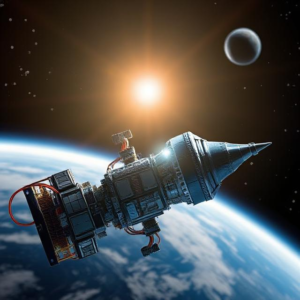
When we talk about electronics in space applications, we’re referring to the use of electronic devices and systems in spacecraft, satellites, rovers, and other equipment used in space exploration. These electronics help control the spacecraft, gather data, communicate with Earth, and much more.
Space is a very harsh environment, so the electronics used in space need to be specially designed to survive things like extreme temperatures, radiation, and a lack of atmosphere.
Why Are Electronics Important in Space?
Electronics are essential in space because they perform key tasks, such as:
- Powering systems like the spacecraft’s engines, navigation, and communication.
- Processing data from sensors and instruments that study planets, stars, and other objects in space.
- Controlling movement, like adjusting the position of satellites or space probes.
- Communicating with Earth to send back data or receive instructions.
Key Types of Electronics Used in Space:
- Power Systems:
- Spacecraft need power to run all their electronics. Solar panels are often used to capture sunlight and convert it into electricity.
- Batteries are used to store this energy for times when the spacecraft is in the shadow of a planet or the sun is too far away.
- Communication Systems:
- Spacecraft need to send data to Earth and receive commands from mission control. This is done through radio communication systems, which use antennas to transmit and receive signals.
- These systems are designed to be very reliable because space is so far away, and communication delays can happen.
- Sensors and Instruments:
- Spacecraft and satellites are equipped with a variety of sensors to collect data about space. These can measure things like temperature, radiation, magnetic fields, or the composition of planets and stars.
- For example, a camera sensor can be used to take photos of distant planets, or a spectrometer can analyze the composition of space dust.
- Navigation Systems:
- Spacecraft need to know where they are in space and how to get to their destination. This is done through navigation electronics that use star trackers, gyroscopes, and GPS systems.
- These systems help control the spacecraft’s position and orientation so that it can travel accurately through space.
- Computers and Processors:
- Just like the computer you’re using now, space applications also need computers to process data, control systems, and make decisions.
- Space computers are designed to be very robust, meaning they can work in extreme conditions, and they need to be able to run autonomously because sometimes a spacecraft is too far from Earth to get real-time instructions.
Challenges of Using Electronics in Space:
Space is not like Earth! Electronics in space face many challenges that electronics on Earth don’t:
- Radiation:
- Space is full of cosmic radiation (high-energy particles from the Sun and other stars). This radiation can interfere with electronics and cause malfunctions or even damage to components.
- Special radiation-hardened electronics are used to protect against this. These components are built to be more resistant to radiation and can handle more stress.
- Extreme Temperatures:
- In space, temperatures can swing dramatically. In direct sunlight, it can be over 250°F (120°C), and in the shadow of a planet, it can be as cold as -250°F (-157°C).
- Electronics must be built to survive these extreme temperatures. Spacecraft often have special thermal control systems to keep the electronics within a safe operating range.
- Microgravity:
- In space, there is microgravity (very weak gravity), which affects how electronics behave. For example, liquids and gases move differently, which can cause problems for cooling systems or fuel management.
- Electronics need to be designed to work in this environment, with special attention to things like thermal management and cooling.
- Size and Weight:
- Spacecraft and satellites need to be as light and small as possible to save fuel and space. So, electronics used in space must be compact, efficient, and lightweight.
- Every part of a spacecraft or satellite is carefully designed to balance performance with weight.
- Reliability:
- Space missions are expensive and can last for many years. Since repairs aren’t possible once a spacecraft is in space, the electronics must be extremely reliable and capable of working for long periods without failure.
Examples of Electronics in Space Applications:
- Satellites:
- Satellites in space use electronics to communicate with Earth, take photos, measure the weather, or study Earth’s atmosphere.
- They rely on solar panels, sensors, and communication systems to keep functioning.
- Space Probes:
- Space probes like the Mars rovers use electronics to move around planets, collect data, and send it back to Earth. The electronics in these probes also help them navigate the surface of other planets and moons.
- These rovers have cameras, scientific instruments, and motors to help explore.
- Space Telescopes:
- Telescopes like the Hubble Space Telescope use electronics to control their instruments and send back high-resolution images of space. The electronics help focus the telescope, adjust its position, and manage data transmission.
- International Space Station (ISS):
- The ISS uses electronics for life support systems, communication, scientific experiments, and navigation. It also has solar panels to provide power and radiation detectors to protect astronauts from harmful space radiation.
How Do We Protect Electronics in Space?
To deal with the challenges of space, space-grade electronics are specially built using the following techniques:
- Radiation-hardened materials to protect against radiation.
- Thermal shielding to protect from extreme heat and cold.
- Redundant systems: Spacecraft often have backup systems (like extra sensors or computers) to ensure that if one part fails, the mission can still continue.
Conclusion:
Electronics in space are crucial for making modern space exploration possible. They help power spacecraft, collect data, communicate with Earth, and keep everything running smoothly. However, designing electronics for space is very challenging because of the extreme conditions like radiation, temperature swings, and microgravity. That’s why electronics in space need to be specially designed to be reliable, lightweight, and able to survive the harsh environment.
Tags: aerospace technology, Antennas, autonomous systems, Batteries, Communication Systems, component miniaturization, cooling systems, cosmic rays, data collection, data processing, Electronic Components, electronic systems., Electronics, electronics in space, Embedded Systems, fail-safe mechanisms, fault-tolerant design, GPS systems, gyroscopes, heat-resistant materials, imaging systems, microgravity, navigation systems, onboard computers, Power Electronics, Power Systems, Processors, radiation shielding, radiation-hardened electronics, radio frequency systems, redundant systems, reliability in space, robust hardware, satellite systems, Sensors, signal transmission, size and weight constraints, solar panels, space applications, Space Communication, space control systems, space electronics, Space exploration, space missions, space radiation, space-grade computers, space-qualified components, spacecraft electronics, Spectrometers, star trackers, Telemetry, temperature extremes, thermal control, thermal shielding, vacuum environment