


current-controlled and voltage-controlled devices :
These are basic concepts in electronics that describe how certain devices behave based on either the current flowing through them or the voltage applied to them.
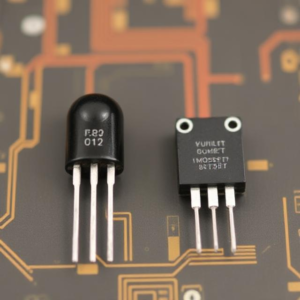
1. Current-Controlled Devices
In current-controlled devices, the current (the flow of electric charge) is the primary factor that controls the device’s behavior. This means the device operates or changes its properties depending on how much current is flowing through it.
Example: Transistor (Current-Controlled)
A good example of a current-controlled device is a bipolar junction transistor (BJT). Here’s how it works:
- The base current (a small current) controls a larger current flowing between the collector and emitter.
- In a BJT, when a small current flows into the base, it allows a larger current to flow between the collector and emitter. The more current you push into the base, the more current can flow between the collector and emitter. So, the base current controls the larger collector-emitter current.
In simple terms, the BJT acts like a switch that is controlled by the current going into the base.
Key Points for Current-Controlled Devices:
- The input to the device is a current (or signal related to current).
- The device’s behavior (like turning on/off, amplifying, or switching) is controlled by how much current is flowing.
- An example is the BJT transistor.
2. Voltage-Controlled Devices
In voltage-controlled devices, the voltage (the difference in electric potential) is the key factor that controls the device’s behavior. This means the device changes or operates based on the voltage applied to it.
Example: Field-Effect Transistor (FET)
A common example of a voltage-controlled device is a Field-Effect Transistor (FET), specifically the MOSFET (Metal-Oxide-Semiconductor Field-Effect Transistor). Here’s how it works:
- A voltage is applied to the gate of the FET.
- This voltage controls the flow of current between the drain and source terminals of the FET.
- The higher the voltage applied to the gate, the more current can flow between the drain and source. When no voltage is applied to the gate, no current flows between the drain and source.
In simple terms, the FET acts like a switch or amplifier where the voltage applied to the gate controls the current between the drain and source.
Key Points for Voltage-Controlled Devices:
- The input to the device is a voltage (or signal related to voltage).
- The device’s behavior is controlled by how much voltage is applied to it.
- An example is the MOSFET transistor.
Key Differences Between Current-Controlled and Voltage-Controlled Devices:
| Feature | Current-Controlled Device | Voltage-Controlled Device |
|---|---|---|
| Control | Controlled by the current | Controlled by the voltage |
| Example | BJT (Bipolar Junction Transistor) | MOSFET (Metal-Oxide-Semiconductor FET) |
| Input | A small current controls the behavior | A small voltage controls the behavior |
| Operation | The current flowing into one terminal controls the larger current flow through the device | The voltage applied to one terminal controls the current flow through the device |
Simple Analogies:
- Current-Controlled Device (BJT):
- Think of it like a water faucet: The amount of water (current) flowing from the faucet is controlled by how much you open the valve (base current).
- The more you turn the valve (more base current), the more water (larger current) flows through the pipe (collector-emitter).
- Voltage-Controlled Device (MOSFET):
- Imagine a gate that opens to allow a car (current) to pass through. The voltage applied to the gate determines how much the gate opens.
- A higher voltage at the gate means the gate opens more, allowing more cars (current) to pass through. No voltage means the gate stays closed, and no cars can pass.
Applications of Current-Controlled and Voltage-Controlled Devices:
- Current-Controlled Devices (BJTs):
- Used in amplifiers, where the input current controls the output current.
- Found in switching circuits where the current determines the on/off state of the device.
- Voltage-Controlled Devices (MOSFETs):
- Used in digital circuits, like in microprocessors, where the voltage controls the switching of transistors.
- Found in power amplifiers and voltage regulators.
Summary:
- Current-controlled devices are controlled by the current flowing through them. An example is the BJT transistor, where the base current controls the larger collector-emitter current.
- Voltage-controlled devices are controlled by the voltage applied to them. An example is the MOSFET transistor, where the voltage at the gate controls the current flowing between the drain and source.
- These two types of devices are fundamental to building circuits, amplifiers, and switches, and understanding them helps us design and work with electronic systems.
Tags: Amplification, analog electronics, base current, Bipolar Junction Transistor, BJT, circuit design, collector-emitter current, control mechanism, current control, current input, current-controlled devices, digital electronics, drain-source current, electric current, electric voltage, electrical properties, electronic switches, electronic systems., Electronics, FET, Field-Effect Transistor, gate analogy, gate voltage, input signal, Microprocessors, MOSFET, output current, Power Amplifiers, Signal Control, small signal control, Switching, transistor, transistor behavior, voltage control, voltage input, Voltage Regulators, voltage-controlled devices, water faucet analogy