


Role of Volunteers in Social Causes – Explained
Volunteers are people who give their time and effort to help others without getting paid. They play a very important role in supporting social causes—these are efforts made to improve the well-being of people, animals, or the environment.
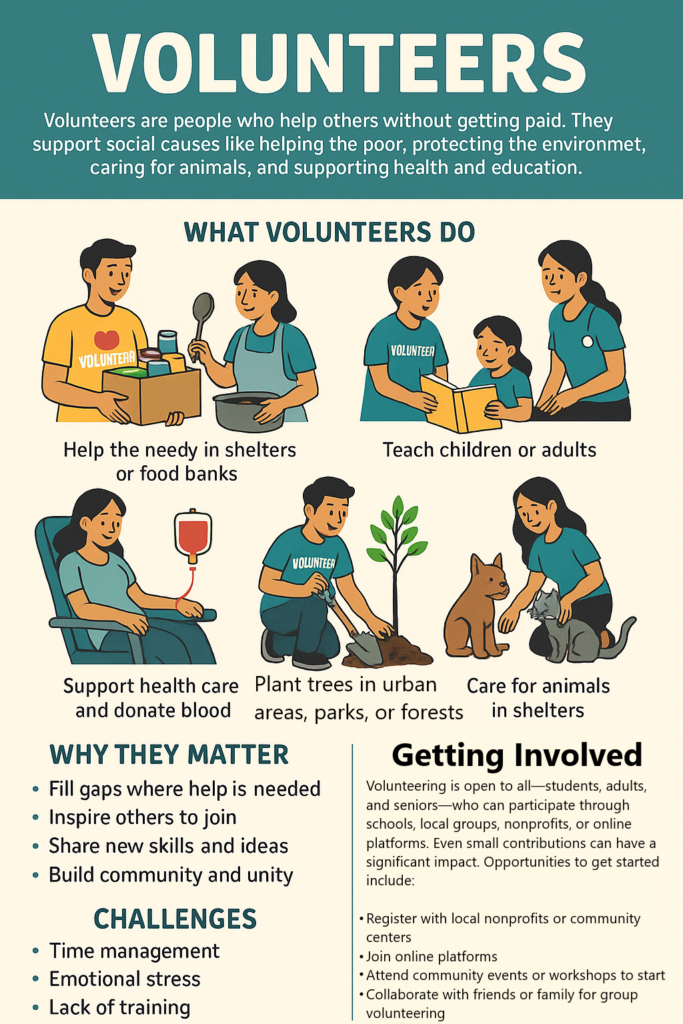
What Do Volunteers Do?
Volunteers help in many different ways, depending on the cause. Here are some examples:
- Helping the Poor: Volunteers may work in shelters, food banks, or donation centers, giving food, clothes, or support to people in need.
- Teaching and Tutoring: Many volunteers help children or adults learn how to read, write, or study for school.
- Protecting the Environment: Volunteers often join clean-up drives, plant trees, or spread awareness about saving the planet.
- Supporting Health Causes: Some help in hospitals, join blood donation drives, or assist in caring for sick or elderly people.
- Animal Welfare: Volunteers may work in animal shelters, rescue groups, or help abandoned animals find homes.
Why Are Volunteers Important?
- They Fill Gaps: In many places, there are not enough workers or money to help everyone in need. Volunteers step in and make a big difference.
- They Inspire Others: Seeing someone volunteer can encourage others to help too. It spreads kindness and builds stronger communities.
- They Bring Skills and Ideas: Volunteers often come with fresh ideas, energy, and talents that help social projects succeed.
- They Build Connections: Volunteering brings people from different backgrounds together, creating friendships and a sense of unity.
Benefits for Volunteers
Volunteering doesn’t just help others—it also helps the person volunteering. Some of the benefits include:
- Learning new skills
- Gaining experience for jobs or college
- Feeling good about helping others
- Meeting new people and making friends
Challenges Volunteers May Face
While volunteering is rewarding, it can come with challenges:
- Time commitment: Some people find it hard to balance volunteering with work or school.
- Emotional stress: Helping in tough situations, like with sick people or during natural disasters, can be emotionally difficult.
- Lack of training: Some volunteers may not feel fully prepared, especially if the job is complex.
Still, most volunteers find the experience meaningful and would recommend it to others.
How to Get Involved
Anyone can volunteer—students, adults, or retirees. You can join local clubs, community centers, schools, non-profits, or even online platforms. Even small acts of volunteering, like helping a neighbor or collecting donations, can make a big impact.
Summary:
Volunteers play a key role in social causes by offering their time, skills, and care to help people, animals, and the environment. They support a wide range of efforts such as feeding the hungry, teaching, cleaning up the planet, and caring for the sick. Volunteering not only helps society but also benefits the volunteers themselves through learning, experience, and personal growth. Despite some challenges, volunteers are a powerful force for good, bringing communities together and making the world a better place.
Tags: and contributing to the betterment of communities, and personal growth are all key aspects related to the role of volunteers in social causes. Volunteers play an essential part in improving society, animal shelters, animal welfare, blood donation, clean-up drives, community centers, connections, donation centers, emotional stress, experience, food banks, health causes, helping the poor, ideas, impact, kindness, learning, non-profits, online platforms, protecting the environment, shelters, skills, social causes, support, supporting important causes, teaching, time commitment, tutoring, volunteering challenges, Volunteers, while also gaining personal and professional benefits.