
1. What is Track Switching?
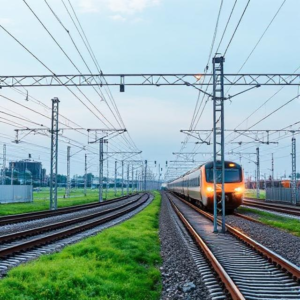
Track switching is the process of changing the direction of a train from one track to another. In railways, switches (also called points) are used to move trains from one track to another safely. It’s like when a car makes a turn from one street to another — the switch helps guide the train onto a new path.
Advanced track switching systems are modern, more efficient systems used to control and automate the process of track switching.
2. Why Are Track Switching Systems Important?
Track switching is important because it allows trains to:
- Change routes: If there are multiple tracks going in different directions, trains need to switch to the correct one to reach their destination.
- Avoid collisions: Proper track switching ensures that trains don’t accidentally run into each other by using different tracks at the right times.
- Increase capacity: Switching systems allow multiple trains to use the same tracks at different times, making the railway network more efficient and reducing delays.
3. How Do Advanced Track Switching Systems Work?
Here’s a simple step-by-step explanation of how advanced track switching systems operate:
a) Traditional Track Switching
- Traditional track switches were operated manually by railway workers. They would physically move a lever or handle to change the track’s direction.
- The worker would check the train’s direction and make sure it switched safely.
b) Modern/Advanced Track Switching
- In advanced systems, the track switching process is often automated or remotely controlled.
- These systems use electric motors, computers, and sensors to move the switches and ensure trains are directed onto the correct tracks.
- The control center or automated system can adjust track switches in real-time based on the current traffic flow.
4. Key Features of Advanced Track Switching Systems
a) Remote Control and Automation
- With advanced systems, train controllers can operate track switches from a centralized control room. They don’t need to be physically near the switch anymore.
- Automatic systems can adjust switches based on real-time data (like the position of trains) without any manual input.
b) Sensors and Monitoring
- Sensors are placed on tracks and switches to monitor the position of trains. If a train is approaching a switch, the system checks whether the switch is in the right position for the train to pass safely.
- If a malfunction is detected (like a switch not being in the right position), the system can send an alert, and the issue can be fixed before a train arrives.
c) Predictive Systems
- Advanced systems can use predictive algorithms that help decide which track a train should be directed to. The system can adjust switches based on the train schedule, the speed of the train, or real-time traffic on the network.For example, if a train is running late, the system may change its route to avoid congestion and help it get to its destination faster.
d) Interlocking Systems
- Interlocking is a safety feature that prevents conflicts. If a track switch is activated in the wrong way, the system will automatically stop the train to avoid accidents.
- It ensures that switches are in the correct position before allowing a train to pass through, preventing the possibility of two trains running onto the same track.
e) Remote Monitoring and Maintenance
- Advanced systems allow remote diagnostics of track switches. If something goes wrong, engineers can check the condition of switches from a distance and send repair teams if needed.
5. Types of Track Switches in Advanced Systems
There are a few types of advanced track switches used, depending on the needs of the railway:
a) Electrically Operated Switches
- These switches are powered by electricity and are controlled by signals or control rooms. The electric motor moves the switch in the right direction.
- They are very common in high-traffic areas where quick and reliable switching is required.
b) Hydraulic Switches
- Some switches use hydraulic systems to move the rails. These systems use pressurized oil to move the switch, making it smooth and quick.
c) Computerized Switches
- These switches are fully controlled by computers that can change the track automatically based on inputs from the system, like train locations and signals.
d) Switch Points with Sensors
- Some switches are equipped with sensors that monitor the condition of the switch. If there’s a problem (like a piece of debris or malfunction), the system can automatically signal an alert.
6. Benefits of Advanced Track Switching Systems
a) Increased Safety
- By using automated systems and sensors, track switches are always in the right position, which reduces human error and the risk of accidents.
- Interlocking features make sure that the trains are safely routed, preventing train collisions.
b) Efficiency
- Advanced systems can adjust track switches quickly and automatically, allowing trains to stay on time. The system can even prioritize certain trains to avoid delays.
c) Reduced Need for Manual Labor
- Traditional track switching required railway workers to manually control the switches. In advanced systems, automation and remote control mean that fewer workers are needed on-site, reducing labor costs and human error.
d) Real-time Adjustments
- With advanced technology, track switches can be adjusted in real-time to avoid delays, manage train traffic, and adapt to changing conditions on the tracks.
e) Better Traffic Flow
- Automated systems help keep the flow of trains smooth, reducing bottlenecks. This helps get more trains through the system faster, improving the overall capacity of the railway network.
7. Challenges of Advanced Track Switching Systems
While advanced track switching systems bring many benefits, they also come with challenges:
- Initial Cost: Implementing an automated system can be expensive because of the need for new equipment and technology.
- Complexity: Automated systems require sophisticated technology and maintenance. If something goes wrong, it can sometimes be harder to fix.
- Dependence on Technology: If there’s a failure in the technology, the whole system can be affected, leading to delays or even accidents.
8. Example of Advanced Track Switching in Use
In places like high-speed rail networks in Europe or Japan’s Shinkansen, advanced track switching is used to keep trains moving smoothly. These networks have electronic switches that are controlled by centralized control rooms. When trains are approaching, the system ensures the right switches are in place to guide them onto the correct tracks. If a train is delayed, the system can even change the track to get it moving faster.
9. Conclusion
In summary, advanced track switching systems are designed to make train routes safer, more efficient, and easier to manage. These systems use automation, sensors, remote control, and computers to manage the switching process, ensuring that trains can move smoothly and safely from one track to another. While they require a bit of investment and maintenance, the benefits include fewer delays, higher safety, and better use of track space.
If you have any more questions or want to learn about specific systems or countries using these technologies, feel free to ask!
Keywords: Advanced Track Switching Systems, Railway