


1. Amplitude
Amplitude is the height or strength of a wave. In the context of sound, it refers to how loud or soft the sound is. It’s the distance from the middle (resting position) of the wave to the top of the wave (crest) or the bottom of the wave (trough).
- In simple terms: Amplitude is how big or small the wave is. A bigger amplitude means a louder sound, and a smaller amplitude means a softer sound.
- Example: If you’re at a concert, the loud music you hear is because of a large amplitude of sound waves. On the other hand, a whisper has a small amplitude.
Amplitude in Physics: In physics, amplitude refers to the maximum displacement of a wave from its resting position (equilibrium). It can apply to sound waves, light waves, or any kind of wave. The higher the amplitude, the more energy the wave carries. For sound, higher amplitude means more energy, which we perceive as louder sound.
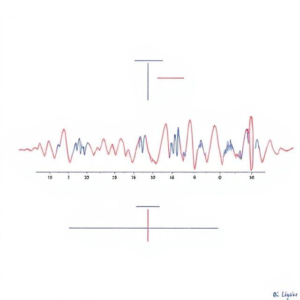
2. Frequency
Frequency is how often a wave passes a point in one second. It tells you how many times the wave repeats itself over a period of time.
- In simple terms: Frequency is the number of times a wave occurs in one second.
- Example: Imagine a swing. If you push the swing and it goes back and forth 10 times in one second, the frequency is 10 swings per second, or 10 Hertz (Hz). For sound, a higher frequency means a higher pitch, like a whistle, while a lower frequency means a lower pitch, like a drum.
3. Period
Period is the time it takes for one full cycle of a wave to pass a point. It is the inverse of frequency.
- In simple terms: The period is how long it takes for a wave to repeat itself once. If you know the frequency, you can easily calculate the period (and vice versa).
- Example: If a wave repeats 5 times per second (5 Hz), the period would be 1/5 of a second, or 0.2 seconds. It’s like how long it takes for one swing to go from one side to the other and back.
4. Phase Shift
Phase shift refers to a change in the starting point of the wave. It’s how much the wave is shifted to the left or right along the time axis.
- In simple terms: If two waves are not lined up perfectly, the amount by which one wave is ahead or behind the other is called the phase shift.
- Example: Imagine two people waving their hands. If they start waving at the same time, their motions are in phase. If one person starts a little later, they’re out of phase, and the amount they are shifted is the phase shift.
Relationship Between Amplitude, Frequency, Period, and Sound
- Amplitude determines how loud the sound is.
- Frequency determines the pitch of the sound (high pitch = high frequency, low pitch = low frequency).
- Period is just the inverse of frequency: a long period means a low frequency, and a short period means a high frequency.
- Phase Shift can change how two sound waves interact, which can affect the way the sound is heard (for example, in music, phase shifts are used creatively).
Summary with Example:
- Amplitude: Larger amplitude = louder sound, smaller amplitude = quieter sound.
- Frequency: Higher frequency = higher pitch (e.g., a whistle), lower frequency = lower pitch (e.g., a drum).
- Period: If a wave has a high frequency, it has a short period. If the wave has a low frequency, it has a longer period.
- Phase Shift: This is the shift in timing between waves. If two sound waves are out of phase, they might cancel each other out or combine to make a different sound.
How Amplitude Works in Sound:
In sound waves, amplitude represents how much the air particles are displaced as the sound travels through them. A larger displacement means a louder sound because more energy is being transferred. A smaller displacement means a quieter sound.
For example:
- A loud guitar strum creates large amplitude sound waves with strong vibrations, causing the air particles to move a lot.
- A soft whisper creates smaller amplitude waves with less energy and smaller vibrations in the air.
Amplitude in Detail (Physics):
In physics, the amplitude of a wave is a measure of its maximum displacement from the equilibrium (rest) position. For sound waves, this means the maximum distance that air particles move as the sound wave passes.
- For longitudinal waves (like sound), the displacement is the compression or rarefaction of particles.
- For transverse waves (like light or water waves), the displacement is the height of the wave crest or trough from the central rest position.
The energy in a wave is proportional to the square of its amplitude. So, if the amplitude doubles, the energy in the wave increases by a factor of four.
Conclusion:
- Amplitude is how big or small the wave is, which affects loudness in sound.
- Frequency tells you how often the wave occurs, which affects pitch.
- Period is the time for one full cycle, related to frequency.
- Phase Shift describes the shift in timing between waves.
All these concepts are essential for understanding how sound, light, and other waves behave in our world.
Tags: acoustic energy, air particle movement, Amplitude, compression, crest, displacement, Energy, equilibrium, large amplitude, longitudinal wave, loud sound, loudness, maximum displacement, physics, quiet sound, rarefaction, resting position, small amplitude, softness, Sound Intensity, sound propagation, sound wave amplitude, Sound Waves, square of amplitude, transverse wave, trough, vibration, wave behavior, wave dynamics, wave energy, wave height, wave measurement, wave properties, wave strength