


Real-Time Train Location Monitoring is a system that helps track where a train is at any given moment. It uses technology to provide up-to-date information about a train’s position, speed, and movement along the tracks. Here’s a simple breakdown of how it works:
1. What is Real-Time Train Location Monitoring?
- It’s a system that tracks the position of trains as they move along their route, providing updates to train operators, control centers, and even passengers.
- The goal is to know exactly where a train is, at all times, in order to improve safety, efficiency, and overall operations.
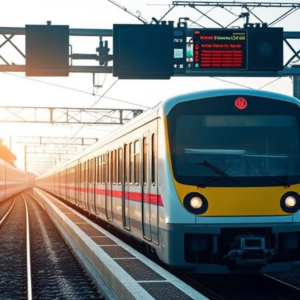
2. How Does It Work?
There are several key technologies used in real-time train location monitoring:
- Global Positioning System (GPS):
- Trains are equipped with GPS devices, which use signals from satellites to determine the train’s exact location.
- The GPS device sends this information to the control center, so operators can see the train’s position on a map in real-time.
- Trackside Sensors and Beacons:
- On some railway networks, there are sensors or beacons installed along the tracks. These sensors detect when a train passes by and send location data back to the control center.
- These sensors can help determine the position of the train in areas where GPS might not work well (like tunnels or areas with poor satellite signal).
- Onboard Communication Systems:
- Trains also use onboard communication systems (like radio signals or fiber optics) to send data to the control center.
- These systems provide real-time updates, including speed, location, and even any technical issues the train might be facing.
- Train Control Systems:
- In some advanced systems, the train’s movements are monitored by a central control system that coordinates with signals along the tracks.
- This system can automatically adjust the train’s speed or route if needed, preventing accidents and improving the flow of train traffic.
3. Why is Real-Time Train Location Monitoring Important?
- Safety: By knowing the exact location of each train, operators can avoid accidents or collisions, especially on busy tracks. If two trains are too close to each other, the system can alert the operator to slow down or change routes.
- Efficiency: Real-time tracking helps optimize train schedules. Control centers can adjust train movements in response to delays, maintenance, or unexpected situations, keeping everything running smoothly.
- Passenger Experience: Passengers can get live updates about the train’s arrival time, delays, and the train’s exact location, which improves their experience and helps them plan better.
- Train Scheduling and Dispatching: Train operators and control centers can manage train traffic more effectively. If they know where all the trains are, they can schedule departures, arrivals, and maintenance more efficiently.
4. What Information Does it Provide?
Real-time train location monitoring systems offer various types of information:
- Train Position: The exact location of the train on the track.
- Speed: How fast the train is moving.
- Route/Direction: The route the train is following, including upcoming stations or stops.
- Arrival Time: The estimated time the train will arrive at the next station.
- Delays or Issues: Any delays, maintenance problems, or technical issues with the train.
5. How Do Passengers Benefit?
- Live Tracking: Passengers can use apps or websites to track the train in real-time, knowing exactly when it will arrive.
- Delay Updates: If the train is delayed, passengers will get updates on how much longer they need to wait.
- Improved Scheduling: Real-time data helps ensure that trains are not overcrowded, and that people are waiting at the right platforms.
6. Challenges:
- Infrastructure: Not all railways have the necessary infrastructure in place (like GPS or trackside sensors) to implement real-time tracking everywhere.
- Weather Conditions: Sometimes, bad weather or geographic obstacles (like tunnels) can interfere with GPS signals, making tracking harder in certain areas.
- Data Accuracy: The quality of the data relies on the technology in place. If the GPS signal is weak, or the sensors are faulty, the tracking information might not be as accurate.
7. Examples of Real-Time Train Location Monitoring Systems:
- Indian Railways’ National Train Enquiry System (NTES): This system allows passengers to track train locations and get real-time updates about their status.
- European Railways: Many countries in Europe use advanced monitoring systems like the European Train Control System (ETCS) for real-time tracking and control of trains.
Conclusion:
Real-time train location monitoring is a key part of modern railway systems. It uses GPS, sensors, and communication systems to track trains and ensure safe, efficient operations. Not only does it help train operators manage schedules, but it also improves passenger experience by providing accurate, real-time updates on train locations and delays.
Keywords: Real-Time Train Location Monitoring, Railway