


1. What is Smart Railway Infrastructure?
Smart Railway Infrastructure refers to using advanced technology to make train systems safer, faster, more efficient, and more sustainable. It’s like upgrading the whole railway system with modern tools that can automatically monitor, control, and improve the operation of trains and tracks.
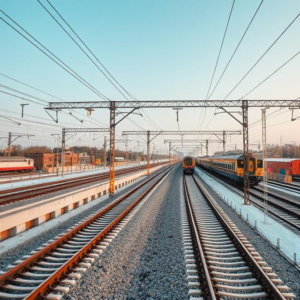
2. How Does Smart Railway Infrastructure Work?
The core idea is to use sensors, communication systems, and data to make the railway system smarter. Here’s how it works:
- Sensors on Tracks and Trains: Sensors are placed along the tracks or inside the trains. These sensors collect information about the train’s speed, location, and condition of the tracks. This data is sent to computers or control centers.
- Real-Time Data: The system collects real-time data to make decisions like adjusting train speed, detecting issues (like obstacles or track damage), and managing the flow of trains to avoid delays.
- Communication Networks: Trains, signals, and control centers communicate with each other through wireless networks to share information, ensuring smooth operations.
3. Key Features of Smart Railway Infrastructure
a) Smart Signals
- What it is: Signals along the tracks control when a train can go or stop. Smart signals can automatically adjust based on the train’s speed and location.
- How it helps: This improves efficiency and safety because trains can follow signals more precisely, reducing delays and preventing accidents.
b) Track Monitoring
- What it is: Sensors are placed on the tracks to check for problems like cracks, wear, or damage. These sensors continuously monitor the condition of the tracks.
- How it helps: This helps in preventing accidents or breakdowns by alerting authorities to fix issues before they become serious problems.
c) Train Positioning Systems
- What it is: GPS and other technology track where a train is at any given moment. The system keeps track of the train’s location, speed, and direction in real time.
- How it helps: It improves train scheduling and prevents accidents by ensuring trains are in the right place at the right time.
d) Predictive Maintenance
- What it is: Using data from sensors and past train performance to predict when maintenance (like repairs or upgrades) is needed.
- How it helps: This reduces train breakdowns and delays by fixing problems before they happen, instead of waiting for something to break down.
e) Energy Management
- What it is: Smart systems monitor energy use and optimize the amount of power trains use. It can even adjust things like train speed to save energy.
- How it helps: This reduces costs and makes the system more environmentally friendly by using energy more efficiently.
f) Passenger Information Systems
- What it is: Smart railways provide real-time information to passengers about train arrival times, delays, and other updates. It can also notify passengers about seat availability or train crowding.
- How it helps: This makes travel more convenient and comfortable, helping passengers make better decisions about their journey.
4. Advantages of Smart Railway Infrastructure
- Improved Safety: With sensors detecting issues before they happen, like track problems or train malfunctions, smart systems reduce accidents.
- Efficiency: The system helps reduce delays by managing train schedules and controlling signals more precisely. It also saves energy by optimizing train speed and energy use.
- Cost Savings: Predictive maintenance means less emergency repairs and breakdowns, saving money in the long run.
- Better Passenger Experience: With real-time updates and smoother operations, passengers experience fewer delays and more comfort during their travels.
- Environmental Benefits: Energy management helps reduce energy consumption, making trains more eco-friendly.
5. Examples of Smart Railway Infrastructure
- European Railways: Countries like Germany and France are using smart technologies for track monitoring, predictive maintenance, and real-time train tracking.
- Singapore MRT: The Singapore Mass Rapid Transit (MRT) system uses smart technology to monitor train operations, manage crowding, and keep everything running smoothly.
- Japan’s Shinkansen (Bullet Trains): Japan has a very advanced system that includes smart signals, energy-efficient systems, and real-time updates for passengers.
Summary:
- Smart Railway Infrastructure uses advanced technology (like sensors and data systems) to make the train network safer, faster, and more efficient.
- It includes things like smart signals, track monitoring, train tracking systems, and predictive maintenance.
- These upgrades help make train travel smoother, safer, and more energy-efficient.
In short, smart railways are like upgrading the whole railway system to work better using the latest technology! Would you like to know more about any specific part of it?
Keywords: Railway Infrastructure, Railway