

Skip to content
EasyEngineeringHub Logo

Welcome to EasyEngineeringHub

☰
🔍
🔔
🔍
  • Home
  • Tutorials
    Electronics Computer Science Mechanical Physics Skill Development
  • Quiz
    Electronics Quiz CS Quiz Physics Quiz Mechanical Quiz Professions Quiz
  • Blogs
    Electronics Computer Science Mechanical Physics General Knowledge Education & Personal Development
  • Resources
    Course Index Project Hub Data Analysis JobQuest Careers AI Tools
🔔
  • Home
  • Tutorials
    Electronics Computer Science Mechanical Physics Skill Development
  • Quiz
    Electronics Quiz CS Quiz Physics Quiz Mechanical Quiz Professions Quiz
  • Blogs
    Electronics Computer Science Mechanical Physics General Knowledge Education & Personal Development
  • Resources
    Course Index Project Hub Data Analysis JobQuest Careers AI Tools

Empowering engineering students with clear, foundational knowledge to master key concepts and succeed academically and professionally.

×
×
Easy Engineering Hub Logo Subscribe to EasyEngineeringHub

Thank You!

Thank you for subscribing to EasyEngineeringHub.

Actuators in Electronics : Explain

BY ADMIN February 6, 2025

Actuators in Electronics

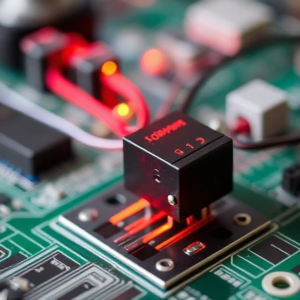
Actuators are devices that perform actions based on instructions from a system, usually in response to a sensor or input. They convert electrical energy into mechanical motion or other forms of energy to perform tasks. Let’s break down some common actuators:
1. Servo Motor

  • What it is: A motor that can precisely control its position.
  • How it works: It has a built-in feedback system that helps it rotate to a specific angle. You tell the servo motor what angle to move to, and it will turn to that exact position.
  • Common use: Used in robotics, remote-controlled cars, and cameras for adjusting angles, such as turning a robot’s arm or controlling the position of a steering mechanism.

2. DC Motor

  • What it is: A motor that runs on direct current (DC) and rotates continuously when powered.
  • How it works: When electricity flows through the motor, it generates a magnetic field, causing the motor to rotate. You can control its speed by adjusting the voltage.
  • Common use: Found in things like fans, electric cars, toys, and other devices that need continuous rotation.

3. Stepper Motor

  • What it is: A motor that moves in small, precise steps instead of continuous rotation.
  • How it works: It rotates by a fixed amount (step) for each electrical pulse it receives. This gives you fine control over its position, without the need for feedback.
  • Common use: Used in 3D printers, CNC machines, and robots where precise movement is needed, such as moving to exact positions in a step-by-step fashion.

4. LEDs (for visual indicators)

  • What it is: Light-emitting diodes (LEDs) are small lights that light up when electricity flows through them.
  • How it works: When current flows through an LED, it emits light. LEDs come in many colors and sizes, and they are very energy-efficient.
  • Common use: Used to indicate the status of a device (like power on/off), displays (in clocks or digital readouts), or as visual feedback in electronics projects.

5. Buzzer or Speaker

  • What it is: A device that makes sound when powered.
  • How it works: A buzzer creates sound using a vibrating diaphragm or piezoelectric element. A speaker works similarly but usually has a more complex design to produce different pitches or tones.
  • Common use: Buzzers are used in alarms, notifications, and alerts. Speakers are used in things like music players, sound effects in projects, or voice outputs.


Tags: 3D printers, acoustic signal, Actuators, alarm systems, angle control, audio actuator, audio feedback., buzzer, camera gimbals, CNC machines, continuous rotation, Control Systems, DC Motor, digital output, direct current motor, electric toys, electric vehicles, electrical to mechanical conversion, electromechanical devices, electronic alerts, electronic control systems, energy-efficient lighting, fans, feedback system, incremental rotation, LEDs, light-emitting diode, mechanical motion, motion control, piezo buzzer, position control, precise positioning, pulse-driven motor, RC vehicles, robotic arms, Robotics, sensor response, Servo Motor, sound generation, sound output, speaker, speed control, status display, step control, Stepper Motor, system output, tone output, user feedback, visual feedback, visual indicator, voice systems

Post navigation

An Introduction to Essential Sensors and Modules in Electronics
Applications of Analog Communication : Explain

Recent Posts

  • The Impact of Education on Personal and Social Development
  • Career Planning and Development: Foundations for a Successful Future
  • Internships: Where Your Career Journey Begins
  • Building Your Career: Resume Writing and Job Interview Tips
  • Skills for the Future: Global Strategies for Employment Growth

Recent Comments

  1. www.Gtc-forex.co.in/Login-platform/ on Linear and Non-Linear Applications of Op-Amps
  2. FxPro trading platform India on Linear and Non-Linear Applications of Op-Amps
  3. aq999playbd.com on Linear and Non-Linear Applications of Op-Amps
  4. https://7j777bangladesh.com on Linear and Non-Linear Applications of Op-Amps
  5. Ok777 online casino on Linear and Non-Linear Applications of Op-Amps

Archives

  • May 2025
  • April 2025
  • March 2025
  • February 2025
  • January 2025
  • December 2024

Categories

  • AC Circuits
  • Advanced Digital Techniques
  • Advanced Electronics Components
  • Advanced VLSI Technologies
  • Amplifiers
  • Basics Electronics
  • Cellular Networks
  • Circuit Analysis and Simulation
  • Circuit Basics
  • Circuit Design Techniques
  • Circuit Theory and Design
  • Circuits
  • Communication Systems
  • Computer Science
  • Connectivity Modules
  • Control System
  • DC Circuits
  • Design
  • Digital Design
  • Digital Electronics
  • Digital Fundamentals
  • Diode
  • E-commerce
  • Economic Growth
  • Education & Personal Development
  • Electrical
  • Electricity
  • Electromechanical
  • Electronic Design and Manufacturing
  • Electronics
  • Embedded Systems
  • Energy
  • Environment
  • General Knowledge
  • Health Care
  • Indian Government
  • Integrated Circuits
  • Magnetic Materials
  • Material Science
  • Measuring instruments
  • Mechanical
  • Memory and Storage
  • Microcontrollers
  • Network Security
  • Optical Communication
  • Optoelectronics
  • Oscillators
  • Other Components
  • PCB Design
  • Physics
  • Power Electronics and Energy Systems
  • Railway
  • Rectifiers and Filters
  • RF Electronics
  • Secure Communication Protocols
  • Semiconductor Basics
  • Sensors
  • Signal conversion
  • Skill Development
  • Specialized Components
  • Thermal Management
  • Transistors
  • Uncategorized
  • Vision Systems
  • VLSI (Very-Large-Scale Integration)
  • Waveforms
  • Privacy Policy
  • Disclaimer
  • Terms & Conditions
  • Home
  • Contact Us
  • About Us

© 2025 All Rights Reserved | easyengineeringhub.in

↑